How to Secure a CERN Summer Student Spot as an Indian Engineer
Learn the exact timeline, eligibility tricks, CV tweaks, and professor‑contact strategies you need to turn your CERN dream into a reality—even with a modest CGPA.

Chitranshu Rajput
9 min read
When you see a post about a “CERN Summer Student” and think “that’s for people with perfect GPAs, tons of papers, and a passport full of visas,” you’re not alone. Most Indian engineers hit the same wall: the programme feels distant, the paperwork looks endless, and the cold‑email etiquette is a mystery.
Below is a step‑by‑step blueprint that takes you from “I’ve heard about CERN” to “I’ve booked my flight to Geneva.” Follow each section, set the milestones, and treat the checklist like a workout plan – consistent effort beats occasional sprint every time.
Understanding the CERN Summer Student Programme
What the programme looks like
- Duration: 8‑10 weeks, usually between late June and early September.
- Structure: You join a research group, work on a concrete project, attend weekly seminars, and get a chance to tour the LHC facilities.
- Funding: CERN provides a monthly stipend (typically enough to cover basic living costs in Geneva), a travel grant, and accommodation in the on‑site residence. The exact amount varies year to year, so check the official site for the latest figure.
Who can apply – the Indian engineering lens
- Degree status: You must be enrolled in a Bachelor’s programme (3‑year) or a Master’s programme (2‑year) at an accredited Indian university. Final‑year undergraduates are eligible, as are students who have completed at least two semesters of a Master’s.
- Academic standing: CERN lists a minimum CGPA of about 6.5 / 10, but the real filter is relevance and research potential. Strong project work can compensate for a modest GPA.
- Language: English proficiency is mandatory; most groups expect you to read technical papers comfortably.
What CERN looks for
- Research orientation – evidence that you enjoy digging into a problem, not just solving textbook exercises.
- Technical depth – solid grounding in the engineering discipline you claim (e.g., electronics, mechanical, software).
- Motivation & fit – a clear link between your interests and the group’s ongoing work.
- Communication – ability to explain concepts succinctly, both in writing and verbally.
Timeline and Important Deadlines
| Milestone | When to start | Why it matters |
|---|---|---|
| Explore groups & topics | 12‑15 months before the summer | Gives you time to read recent CERN papers and spot a supervisor whose work aligns with yours. |
| Prepare CV & transcripts | 10‑12 months ahead | Allows multiple rounds of feedback from professors and campus career cells. |
| Contact potential supervisors | 9‑10 months ahead | Gives them enough time to reply, and you can tweak your proposal based on their input. |
| Submit online application | 6‑7 months ahead (usually early June) | The portal closes quickly once open; early submission avoids last‑minute glitches. |
| Request recommendation letters | 5 months ahead | Professors are busy; a polite reminder two weeks before the deadline saves you from a missing letter. |
| Interview preparation | 3‑4 months ahead | Practice technical questions and mock interviews while the material is still fresh. |
| Visa & travel arrangements | 2‑3 months ahead | Indian passport holders need a short‑stay Schengen visa; processing can take 3–4 weeks. |
Personal milestone cheat‑sheet
- Month – 15: List 5‑7 CERN groups that excite you.
- Month – 12: Draft a 1‑page project idea for each group.
- Month – 9: Send cold emails (see next section).
- Month – 6: Finalise CV, collect transcripts, fill the portal.
- Month – 5: Follow up on recommendation letters.
- Month – 4: Start interview mock sessions.
- Month – 2: Apply for the Schengen visa; book a flight only after acceptance.
Stick to these checkpoints; treat them like exam dates and you’ll avoid the “I missed the deadline” panic.
Building a Competitive Profile
Crafting a research‑focused CV
- Header: Name, contact (Indian mobile, Gmail), LinkedIn/GitHub links.
- Education: Institution, programme, CGPA, expected graduation, relevant coursework (e.g., Signal Processing, Finite Element Analysis).
- Research & Projects (core section):
- Title, duration, supervisor, brief 2‑line description, tools used, outcome (paper, prototype, demo).
- Quantify impact: “Reduced sensor noise by 30 %” or “Implemented real‑time image stitching on a Raspberry Pi.”
- Technical Skills: List languages, simulation tools, hardware platforms – keep it concise.
5 Publications & Conferences (if any): Cite in IEEE style; even a poster counts. - Extracurricular – Hackathons, robotics clubs, open‑source contributions: Shows teamwork and initiative.
Tip: Keep the CV to two pages maximum. Use bullet points, avoid long paragraphs, and ensure consistent formatting.
Highlighting coursework and projects
- Coursework: Mention modules that overlap with CERN’s domains – Accelerator Physics, Cryogenics, High‑Performance Computing, Embedded Systems.
- Projects: Choose 2‑3 that demonstrate hands‑on engineering, data analysis, or software development. Include a link to a GitHub repo or a short video if possible.
Leveraging campus resources
- Professors: Ask them to let you assist in ongoing research; even a semester‑long lab stint can become a strong CV bullet.
- Labs & Centres: Many Indian institutes have collaborations with foreign labs; use those ties to get a co‑author paper or a short‑term visit.
- Career Services: They often run CV‑review workshops – take advantage of them early.
Cold‑Emailing CERN Researchers Effectively
Finding the right supervisor
- Browse the CERN “Research Groups” page – filter by Engineering and note the groups that match your interests (e.g., Accelerator & Beam Physics, Detector Development, Computing & Data Management).
- Read recent papers – pick one that resonates with a project you could contribute to.
- Check the group’s contact info – most senior researchers list an email; avoid generic “info@cern.ch” addresses.
Email template
Subject: Summer Student inquiry – [Your Name], interest in [Specific Project/Topic]
Dear Dr. [LastName],

I am a final‑year B.Tech student in Electrical Engineering at [University], with a CGPA of 7.8/10. I have been following your recent work on [specific paper or project] and was particularly intrigued by the approach to [brief technical point].

During my final year project, I designed a low‑noise front‑end for a silicon detector, achieving a 25 % improvement in signal‑to‑noise ratio using [tool]. I believe these skills align well with the objectives of your group’s [project name] this summer.

Would you consider supervising a CERN Summer Student from India? I have attached my CV, transcript, and a one‑page proposal outlining how I could contribute.

Thank you for your time. I look forward to the possibility of discussing this further.

Best regards,
[Your Full Name]
Phone: +91‑XXXXXXXXXX
LinkedIn: linkedin.com/in/yourprofile
Key points:
- Keep it under 200 words.
- Show you’ve read their work (avoid generic “I’m interested in your group”).
- Attach only CV and a concise proposal; the transcript can be sent later if asked.
Follow‑up cadence
- First follow‑up: 7 days after the initial email – a short “Just checking if you had a chance to look at my proposal.”
- Second follow‑up: 10 days later, politely ask if they need any additional information.
If there’s no reply after two follow‑ups, move on to another group. Persistence is fine; pestering is not.
Writing a Stand‑out Motivation Letter
Structure you can copy
- Opening (2‑3 lines): State the programme, the group you’re applying to, and a hook – a personal anecdote or a specific technical curiosity.
- Research interest (1‑2 paragraphs): Explain why the group’s work excites you, referencing a recent paper or result.
- Why you’re a good fit (1‑2 paragraphs): Connect your project experience, skills, and coursework to the group’s needs.
- Future impact (1 paragraph): Briefly describe how the summer stint will shape your career – e.g., “I aim to pursue a PhD in accelerator physics and bring those insights back to India’s emerging particle‑therapy sector.”
- Closing (1‑2 lines): Re‑affirm enthusiasm and thank the selection committee.
Sample opening paragraph
“When I first assembled a miniature particle detector for my college fest, I was fascinated by how a few silicon strips could reveal the invisible. Reading your 2023 paper on the ATLAS pixel upgrade convinced me that CERN is the place where such curiosity transforms into world‑changing technology, and I am eager to contribute to the [Group Name] this summer.”
Polishing tips
- Word count: 500‑700 words – long enough to be detailed, short enough to stay crisp.
- Tone: Conversational yet professional; avoid overly flowery language.
- Proofread: Use a peer or a professor to check for grammar and clarity.
- Common pitfalls:
- Repeating your CV verbatim – the letter should add a narrative layer.
- Generic statements like “I am a hardworking student.” – show, don’t tell.
- Ignoring the “future impact” part – the committee wants to see a trajectory.
Preparing for the Online Interview
What to expect
- Length: 30‑45 minutes, usually via Zoom or Teams.
- Panel: One or two researchers from the group, sometimes a HR representative.
- Format: 5 minutes of self‑introduction, 15‑20 minutes of technical questions, 5‑10 minutes of your questions.
Typical questions
- Project deep‑dive: “Walk me through the design choices you made in your sensor front‑end.”
- Problem‑solving: “How would you reduce latency in a data‑acquisition system with limited bandwidth?”
- Teamwork: “Describe a conflict in a group project and how you resolved it.”
- Motivation: “Why CERN and why this particular group?”
Demonstrating technical depth & teamwork
- Use the STAR method (Situation, Task, Action, Result) for behavioural questions.
- Bring a slide (one‑page PDF) summarising your most relevant project – you can share screen briefly if asked.
- Show curiosity: Prepare 2‑3 thoughtful questions about the group’s current challenges or upcoming milestones.
Mock interview resources
- Campus career cells often run mock technical interviews – book a slot.
- Peer practice: Pair up with a fellow engineering student; alternate roles as interviewer/interviewee.
- Online platforms: Websites like Pramp or InterviewBit have engineering‑focused mock sessions.
Confidence booster: rehearse answering “Tell me about yourself” in under 90 seconds. It sets the tone and buys you time for the technical part.
Logistics, Visa, and Funding Details
Visa steps for Indian students
- Obtain the invitation letter from CERN (sent after acceptance).
- Apply for a short‑stay Schengen visa (type C) at the Swiss consulate in Delhi, Mumbai, or Chennai.
- Documents checklist: passport (valid > 6 months), recent photographs, travel insurance (minimum €30 000), proof of accommodation (CERN residence confirmation), bank statement (to show you can cover incidental expenses), and the invitation letter.
- Appointment & biometric: Book at least 4 weeks before your intended travel date; processing can take 3‑4 weeks.
Understanding the stipend and accommodation
- Stipend: Typically covers basic meals and a modest rent. It’s not a salary, so plan a small buffer for personal expenses.
- Accommodation: CERN provides a shared apartment in the on‑site residence (often a 2‑bedroom flat). You’ll share a kitchen and bathroom with other students.
- Travel grant: A one‑time amount for round‑trip airfare; you must submit flight receipts after arrival for reimbursement.
Budgeting tips for Geneva
- Food: Cook in the residence kitchen; groceries in supermarkets like Migros are cheaper than eating out.
- Transport: Purchase a monthly “CFF” public‑transport pass – it gives unlimited access to buses, trams, and trains within the canton.
- Currency: Keep a small amount of Swiss francs for cash‑only places; most places accept credit cards.
After Acceptance: Making the Most of Your Summer
Pre‑arrival preparation
- Read the group’s recent papers – aim to understand the methodology, not just the results.
- Refresh core tools: If the project uses ROOT, Python, or LabVIEW, brush up on them through online tutorials.
- Set up a VPN account (CERN provides one) and test remote access to internal documentation.
Networking strategies
- Attend all seminars – they’re a goldmine for meeting senior scientists.
- Join the “Summer Student” Slack channel – introduce yourself, share a fun fact, and ask for coffee chats.
- Schedule short one‑on‑ones with the group’s post‑docs; they often become mentors for the duration.
Turning the summer into a springboard
- Document your work daily; maintain a simple logbook (Markdown works fine).
- Aim for a deliverable – a short report or a prototype that you can showcase in your CV.
- Ask for a recommendation before you leave; a letter from a CERN researcher carries huge weight for PhD applications or industry roles.
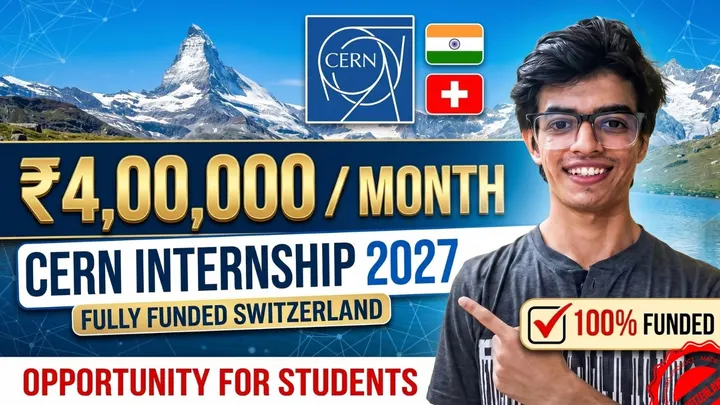
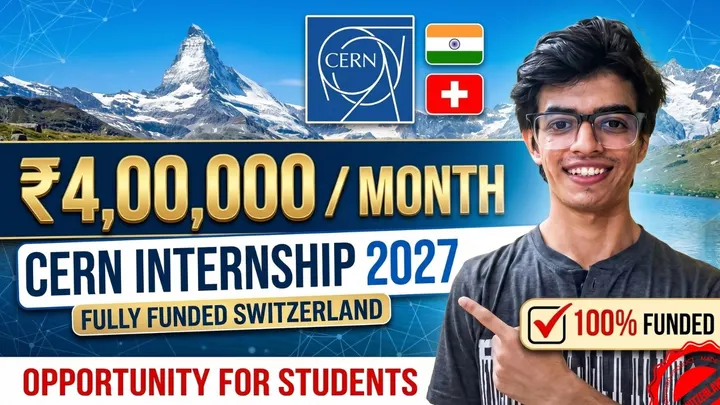
That’s the whole roadmap. If any step feels fuzzy, drop a comment below – I’ll try to help you untangle it. And don’t forget to check out my video “₹4,00,000Month CERN Internship 2027 🇨🇭 Fully Funded Switzerland Opportunity for Students” for a quick visual recap and some behind‑the‑scenes tips.
Wishing you a smooth application and an unforgettable summer at CERN!
Found this useful?

Comments
Questions, experiences, thank-yous: all welcome. No sign-up needed.