How to Nail EPFL and ETH Zurich Summer Fellowships
Discover the exact eligibility tricks, application timeline, and professor‑contact strategy to win a fully funded summer fellowship at EPFL or ETH Zurich, even if your CGPA isn’t perfect.

Chitranshu Rajput
7 min readUpdated 1 view
EPFL and ETH Zurich run summer research fellowships that many Indian undergrads eye because they combine a solid stipend, world‑class labs and a name that looks great on any resume. The real question you probably have right now is: Can I get in even if my CGPA isn’t a perfect 9.5? The answer is yes – you just need a plan, a bit of persistence and the right set of documents. Below is the roadmap I follow with every junior who asks me for help, broken down into bite‑size steps you can start today.
Why EPFL and ETH Zurich Summer Fellowships Matter
Funding that covers travel, accommodation and a monthly stipend – both institutions typically pay enough to live modestly in Switzerland without draining your savings. The stipend is usually a few thousand Swiss francs per month, paid directly to you, so you don’t have to rely on a part‑time job.
Prestige that opens doors – a few weeks in a lab that publishes in top journals adds weight to your CV. Recruiters at Indian tech firms and research labs instantly recognize the EPFL/ETH brand, and many alumni report faster interview calls and higher salary offers.
Network and exposure – you’ll work side‑by‑side with professors and PhD students from all over the world. Those connections often turn into future collaborations, PhD references or even a job offer in Europe.
Eligibility Checklist and Common Myths
| Requirement | Typical Expectation | What you should really focus on |
|---|---|---|
| CGPA | 8.0 + (out of 10) is often quoted | A solid 7.0–7.5 can still get you in if other parts shine. |
| Language | English fluency; some labs ask for basic French (EPFL) or German (ETH) | A good IELTS/TOEFL score (6.0+) is enough; language classes can be taken later. |
| Citizenship | Open to all nationalities, but you must have a passport that can get a Swiss visa | No extra paperwork for Indian students beyond the usual visa. |
| Study level | Currently in 3rd/4th year of B.Tech/B.E. or a master’s first year | Make sure you have at least two semesters left after the summer. |
Debunking the “high GPA only” myth
Many students think a 9+ CGPA is a non‑negotiable gatekeeper. In reality, the selection committees look at research potential, motivation, and fit with the lab. A well‑written motivation letter that explains why you care about a specific project can outweigh a 0.2‑point CGPA gap.
Common mistake: putting the CGPA front‑and‑center on the CV and hoping it speaks for itself. Instead, showcase any project work, coding competitions, or coursework that aligns with the lab’s focus.
Finding the Right Lab and Project
- Start with the institution’s summer program page – both EPFL and ETH have dedicated portals listing available labs, project titles and brief descriptions.
- Identify keywords that match your coursework or hobby – e.g., “microfluidics”, “machine learning for materials”, “computational chemistry”.
- Dive into the lab’s own website – look at recent publications (last 2‑3 years) to see what they’re actually doing.
- Create a short spreadsheet with columns: Lab name, Professor, Project title, Required skills, Recent paper links, Your matching skill(s).
Quick tip for busy students
If the portal lists 30+ projects, filter by the ones that mention a skill you already have (e.g., Python, MATLAB, CAD). It’s easier to convince a professor that you can hit the ground running when you already own part of the toolbox.
Crafting a Winning Application Package
1. CV – keep it to one page
- Header: Name, phone (with country code), email, LinkedIn/GitHub link.
- Education: Institution, branch, CGPA (rounded to one decimal), relevant coursework (max 4).
- Research / Projects: Title, duration, tools used, outcome (paper, demo, code repo). Use bullet points, start each with an action verb.
- Technical Skills: List languages, software, lab techniques in two columns.
- Awards & Extracurriculars: Only those that show initiative – hackathons, science fairs, teaching assistantships.
Avoid: long descriptions of every semester’s subjects; they drown out the research bits.
2. Motivation Letter (max 800 words) – structure you can copy
| Paragraph | Purpose |
|---|---|
| Opening (2‑3 lines) | State the exact fellowship name, the lab you’re applying to, and a one‑sentence hook that shows you’ve read their recent work. |
| Why this lab? (150‑200 words) | Summarize a recent paper, explain what intrigued you, and link it to a skill or project you’ve done. |
| What you bring (150‑200 words) | Highlight 2‑3 concrete achievements (e.g., “developed a CFD model that reduced simulation time by 30 %”). Show how they map to the lab’s needs. |
| Future outlook (100‑150 words) | Mention how the summer stint fits into your longer‑term goal – a master’s, PhD, or industry role. |
| Closing (1‑2 lines) | Thank them, express eagerness to discuss further, and sign off with “Looking forward to hearing from you”. |
3. Recommendation Letters
- Pick professors who know your work – a lab supervisor, a project mentor, or a course instructor who graded a major project.
- Give them a one‑page brief: your CV, the fellowship you’re applying for, and bullet points of what you’d like them to highlight (e.g., “independent problem solving”, “quick learning of new software”).
- Ask for a PDF and keep the file name clean:
Prof_Sharma_Recommendation.pdf.
4. Optional Research Proposal (if the portal asks)
Even a 300‑word outline can impress. Follow this mini‑template:
- Title – clear and specific.
- Background – 2‑3 sentences citing the lab’s recent work.
- Objective – what you aim to achieve in 6‑8 weeks.
- Methodology – tools/techniques you’ll use (e.g., “finite‑element analysis in COMSOL”).
- Expected outcome – a prototype, a data set, or a short report.
Cold‑Emailing Professors Effectively
A polite, concise email is often the first touchpoint. Here’s a proven formula:
Subject line:[Summer Fellowship] – Interest in your work on <keyword> (2026)
Email body (≈150 words):
Dear Prof. <LastName>,

My name is Chitranshu Rajput, a 3rd‑year B.Tech student at NSUT Delhi (CGPA 7.4). I recently read your paper “<Paper Title>” in <Journal> and was fascinated by the <specific technique/result>.

I have hands‑on experience with <relevant skill>, demonstrated in my project <Project Name> where I <brief result>. I am eager to contribute to your group this summer through the EPFL/ETH Zurich Fellowship and would love to discuss any suitable projects you have.

Attached are my CV and a short motivation letter. Please let me know if you need any additional information.

Thank you for your time.

Best regards,
Chitranshu Rajput
Phone: +91‑XXXXXXXXXX
LinkedIn: <link>
Follow‑up cadence
- Day 4‑5: If no reply, send a short “Just checking in” (one line, same subject).
- Day 10‑12: A polite reminder, offering to share a more detailed project outline if they’re interested.
- After 3‑4 attempts: Move on to the next professor – don’t linger on a non‑responsive inbox.
Timeline, Deadlines, and Visa Essentials
| Phase | Typical Window (Swiss summer cycle) | What to do |
|---|---|---|
| Program announcement | Late January – early February | Bookmark the EPFL/ETH summer fellowship pages. |
| Application submission | Mid‑February to early April | Upload CV, letters, and optional proposal. |
| Professor response | Late April – early May | Email labs, get confirmations. |
| Final selection notice | Mid‑May | You’ll receive an acceptance PDF. |
| Visa application | As soon as you have the acceptance letter (late May) | Apply for a Swiss Schengen short‑stay visa (type C). Gather passport, acceptance letter, proof of funds (stipend letter), travel insurance, and a completed visa form. |
| Travel & accommodation | June – early July | Book flights (look for student discounts) and start housing search. |
Visa tips for Indian students
- Apply at least 3 weeks before your intended travel date – the Swiss consulate can be slow during peak season.
- Proof of funds: the stipend letter usually satisfies this; if not, attach a bank statement showing enough balance for the first month.
- Health insurance: a travel policy covering the whole stay (minimum €30,000) is mandatory.
After Acceptance: Preparing for Success
Housing
- University dorms – both EPFL and ETH run short‑term rooms for summer fellows. Apply through the internal portal within a week of acceptance; they’re cheaper than private rentals.
- Shared apartments – websites like students.ch and local Facebook groups list rooms. Aim for a place within a 15‑minute commute to the campus.
Travel budgeting
- Flights: look for round‑trip tickets from Delhi to Zurich or Geneva; early‑bird deals can bring the cost down to INR 30‑35 k.
- Local transport: a monthly Zurich/Lausanne public‑transport pass costs around CHF 80‑100. Get a student discount card if available.
Lab integration tips
- Read the latest 2‑3 papers from the group before day one – you’ll sound prepared in the first meeting.
- Set up a weekly check‑in with the PhD student who will supervise you; treat it like a mini‑project review.
- Document everything – keep a lab notebook (digital is fine) and note down any roadblocks; you’ll need it for the final report.
Making the most of the fellowship
- Attend seminars – both campuses host weekly talks open to fellows. They’re a goldmine for networking.
- Explore the city – Switzerland is compact; use weekends to visit nearby towns (Lucerne, Interlaken). It’s a great way to unwind and meet other international students.
- Plan a post‑summer step – whether it’s applying for a master’s, a research internship, or a job back in India, use the experience as a springboard. Update your CV with the fellowship as soon as you return.
I hope this roadmap clears the fog around EPFL and ETH Zurich summer fellowships. If you’re ready to start, grab your CV, shortlist three labs, and fire off those cold emails today.
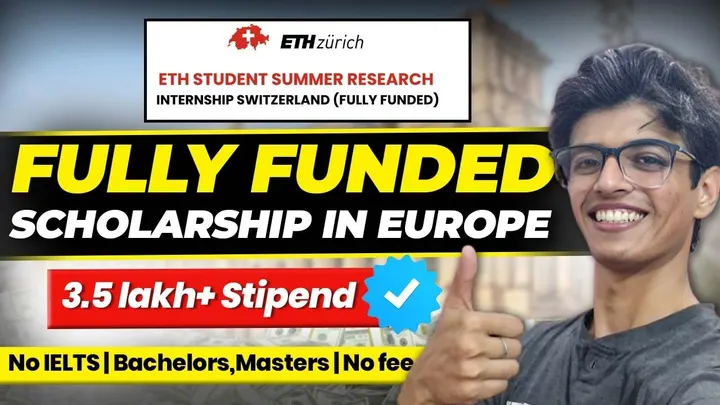
For a quick visual walk‑through, check out my video “ETH Zurich Student Summer Fellowship 2026 EXPLAINED! Stipend, Eligibility, Timeline + Pro Tips 🇨🇭🚀” – it walks you through the same steps with screenshots and a few extra anecdotes.
Feel free to drop your questions in the comments or ping me on Instagram @lifeofkittukun. Good luck, and see you in Switzerland!
Found this useful?


Comments
Questions, experiences, thank-yous: all welcome. No sign-up needed.