From Campus Placements to Your First Tech Job: Real‑World Lessons
Learn how to bridge the gap between campus placement prep and the realities of your first tech role. Practical habits, communication tricks, and early‑career growth tips for Indian engineers.

Chitranshu Rajput
7 min readUpdated 3 views
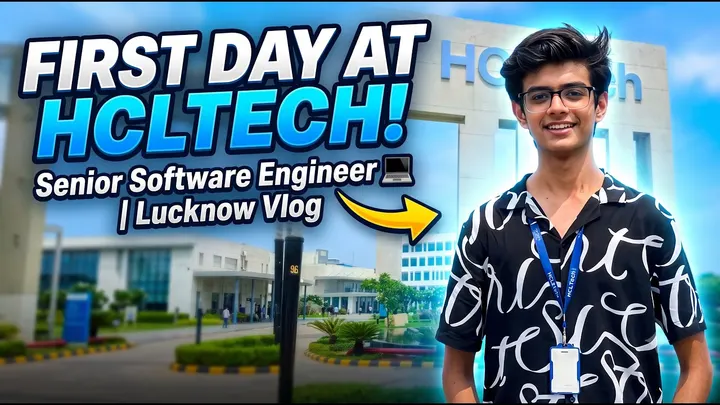
My first day at HCLTech felt like stepping onto a new campus – all excitement, a dash of nerves, and a whole lot of “what now?”.
If you’re fresh off a campus placement and wondering how to turn that interview win into real‑world impact, you’re not alone. The questions that keep you up at night are simple: What will my manager really expect? How do I survive the first month without losing my confidence? And, yes, how do I stop living paycheck‑to‑paycheck once the salary lands in my bank?
Below is a practical, step‑by‑step guide that takes the preparation you did for campus placements and reshapes it into habits that help you thrive in your first tech role. No fluff, just things you can start doing from day one.
What hiring teams really expect after placement
Key competencies beyond academics
Campus recruiters love a clean CGPA sheet and a tidy resume, but once you’re on the bench the focus shifts. Teams look for:
- Problem‑solving in context – Can you take a vague requirement and break it into doable pieces?
- Code readability – A working solution is good; a maintainable one is great.
- Learning velocity – How quickly you pick up the stack, tools, and internal processes.
If you spent the last few months polishing data‑structures for interviews, start mapping those skills to the actual product you’ll be working on. Ask yourself: Which algorithms help the feature I’ll own? That mental link is what managers notice.
Soft‑skill priorities in early‑career roles
Technical chops get you the desk, but soft skills keep you there:
| Soft skill | Why it matters | Quick way to show it |
|---|---|---|
| Communication | Teams are distributed; you’ll be writing tickets, updates, and sometimes demo scripts. | Summarize yesterday’s work in a 2‑minute stand‑up note. |
| Ownership | Junior engineers are expected to deliver small, end‑to‑end pieces. | Volunteer to close a low‑risk bug and document the fix. |
| Adaptability | Requirements change; you’ll need to re‑prioritise without drama. | When a sprint goal shifts, propose a revised plan instead of complaining. |
Common misconceptions from campus prep
- “If I ace the coding round, I’ll ace the job.” Real work involves reading legacy code, debugging production issues, and collaborating with non‑engineers.
- “My GPA is everything.” After the first month, consistency, reliability, and attitude outweigh a single number.
- “I don’t need to ask questions; I’ll look clueless.” Asking the right question early saves hours of wasted effort and shows you care about the outcome.
Setting up for success in the first 30 days
Establishing a learning plan
- Map the tech stack – List the languages, frameworks, CI/CD tools, and monitoring systems you’ll touch.
- Identify knowledge gaps – For each item, rate your comfort 1‑5. Anything below 3 gets a mini‑learning sprint.
- Allocate 1‑hour slots – Block a recurring hour in your calendar for “stack deep‑dive”. Use official docs first, then community blogs.
A simple spreadsheet works fine; the goal is to have a visible roadmap rather than a vague “learn it sometime”.
Building relationships with teammates and managers
- Intro‑round: Within the first week, schedule 15‑minute coffee chats (virtual or in‑person) with 3‑4 peers. Ask about their current focus and a tip they wish they’d known when they started.
- One‑on‑one cadence: Propose a bi‑weekly 30‑minute sync with your manager. Use it to share progress, raise blockers, and request feedback.
- Team rituals: Attend stand‑ups, retrospectives, and any informal “tech talk” sessions. Even if you’re just listening, you’ll pick up the team’s rhythm.
Effective communication and asking questions
When you hit a roadblock, try the “What‑I‑know / What‑I‑don’t‑know / What‑I‑need” template:
What I know: The service uses a REST API built on Spring Boot.
What I don’t know: How authentication is injected into the request pipeline.
What I need: A pointer to the auth‑module repository or a quick walkthrough.
This shows you’ve done the legwork and makes it easy for the responder to help.
Productivity hacks for a junior engineer
Prioritising tasks with limited context
- Clarify the definition of done – Before you start, ask: What does success look like for this ticket?
- Break it into “must‑have” and “nice‑to‑have” – Focus on the core functionality first; extra polish can wait for the next sprint.
- Use the “two‑minute rule” – If a sub‑task can be finished in two minutes (e.g., updating a README), do it immediately. It clears mental clutter.
Using version control and documentation wisely
- Branch naming: Follow the team’s convention (e.g.,
feature/issue-1234). It keeps PRs searchable. - Commit messages: Write a short imperative sentence, then a bullet list of changes. Example:
Add validation for user email - Reject emails without domain - Return 422 with error payload - Doc updates: Treat documentation as code. Add a line in the module’s README whenever you change an API contract. Future you (and your teammates) will thank you.
Time‑boxing learning sessions
Set a timer for 45 minutes, dive into a topic (e.g., Docker networking), then take a 10‑minute break. This Pomodoro‑style block prevents endless rabbit‑holes and leaves you with a concrete takeaway you can apply right away.
Navigating feedback and performance reviews
How to receive and act on feedback
- Listen first – Don’t interrupt; write down the points.
- Clarify – Ask for a concrete example if the feedback feels vague.
- Own the next step – Summarise what you’ll do: “I’ll add unit tests for the edge cases you mentioned and push an updated PR by tomorrow.”
When you act quickly, the reviewer sees you’re responsive, not defensive.
Setting measurable goals
Instead of “be better at debugging”, try:
Goal: Reduce average time to resolve a production bug from 4 hours to 2 hours within the next two months by writing a reusable troubleshooting checklist.
Metrics make progress visible during the next review.
Showcasing impact in early projects
- Quantify – If your code cut a query’s runtime, note the percentage improvement.
- Share – Post a short “What I built” slide in the sprint demo or a Slack channel.
- Link to business value – Explain how the speed‑up helps the product team meet SLA targets or improves user experience.
Even small wins, when framed well, build a reputation of reliability.
Financial and lifestyle adjustments post‑placement
Salary breakdown and budgeting basics
Most Indian graduates joining a Tier‑2 city office see a CTC that includes basic, HRA, PF, and a variable component. A quick way to plan:
- Take home pay – Subtract PF (12 % of basic) and tax (use an online calculator).
- Fixed expenses – Rent, groceries, commute, and any EMIs.
- Variable bucket – Entertainment, gadgets, and savings. Aim for at least 20 % of take‑home to go into a high‑interest savings account or SIP.
If you’re relocating, factor in a one‑time moving cost and a modest “city‑adjustment” buffer for the first three months.
Balancing work with continued upskilling
- Micro‑learning: Use commute or lunch breaks for 10‑minute videos on a new library.
- Weekend project: Pick a small side‑project that aligns with your work stack; it reinforces learning without burning out.
- Company resources: Many firms offer internal courses or reimbursements for certifications – claim them early.
Maintaining mental health in a new city
- Routine: Keep a sleep schedule similar to what you had during college; irregular hours erode productivity.
- Social circle: Join a hobby group (e.g., weekend cricket, photography club) or a tech meetup. A familiar face makes the city feel less alien.
- Boundaries: Set a “no‑work after 8 pm” rule for at least two days a week. It prevents the early‑career burnout trap.
Planning the next 6‑12 months for growth
Identifying mentorship opportunities
- Formal mentors: Ask your manager to pair you with a senior engineer for monthly knowledge‑share sessions.
- Peer mentors: A fellow junior who’s a few months ahead can be a realistic sounding board for day‑to‑day challenges.
- Cross‑team exposure: Volunteer for a short‑term task with another squad; it widens your network and shows initiative.
Building a personal project portfolio
- Choose relevance – If you’re on a backend team, build a small API that solves a real problem (e.g., a personal expense tracker).
- Show process – Host the code on GitHub with a clear README, CI badge, and a short video demo.
- Link to work – In your internal profile or LinkedIn, mention the project as “Side project: built with Go, Docker, and PostgreSQL – 80 % code coverage”.
A portfolio demonstrates depth beyond the corporate projects that may be under NDA.
Preparing for future promotions or moves
- Skill matrix: List the competencies required for the next level (often available on the intranet). Rate yourself and create a 3‑month action plan for each gap.
- Impact ledger: Keep a running document of all contributions—bug fixes, feature launches, process improvements—with dates and outcomes. It becomes the evidence you need during promotion talks.
- External exposure – Publish a short blog post on a technical challenge you solved, or speak at a local meetup. Visibility outside the office adds weight to your internal case.
That’s a lot to take in, but remember: the first job is a marathon of tiny, repeatable actions, not a single heroic sprint. Start with the checklist that feels most urgent—maybe it’s setting up that learning hour or booking a coffee chat—and let the rest fall into place.
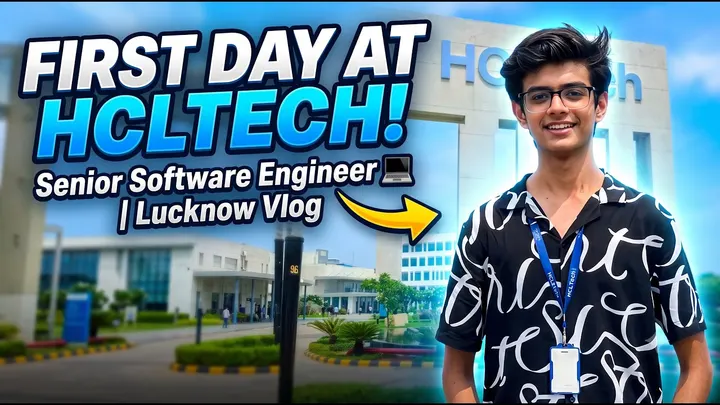
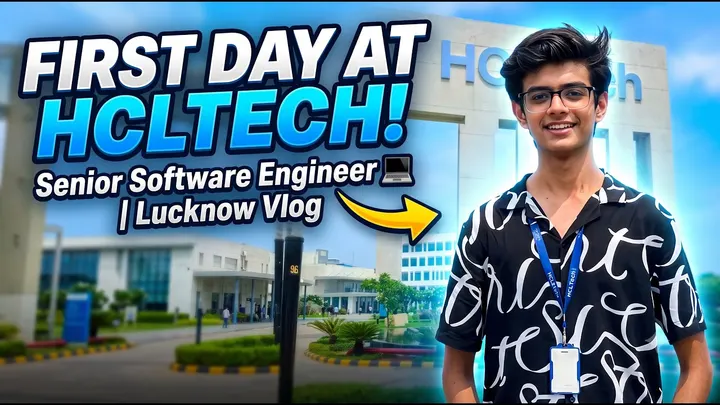
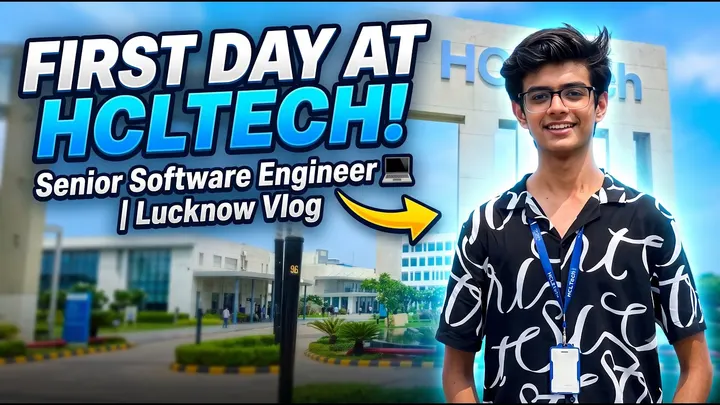
If you want to see how I navigated my own first week at HCLTech Lucknow, check out my video on this linked above. Drop your questions in the comments; I love hearing what’s tripping you up and sharing the fixes that helped me. Good luck, and enjoy the ride!
Found this useful?
Comments
Questions, experiences, thank-yous: all welcome. No sign-up needed.