From Campus Placements to Your First Tech Job: Practical Lessons
Learn how to bridge the gap between campus placements and your first engineering role with actionable habits, communication tricks, and productivity hacks that set you up for success from day one.

Chitranshu Rajput
7 min read
From campus placements to your first tech job, the biggest question most of us ask is: What will the first few months actually feel like? The answer isn’t a tidy PowerPoint slide – it’s a mix of new tools, unfamiliar rhythms, and a lot of learning on the fly. Below is a step‑by‑step playbook that turns the excitement of a campus offer into a smooth, confidence‑filled start at your new company.
I’ll walk you through the reality gap, the first‑week checklist, communication hacks, productivity tricks, office‑culture clues, skill‑building routines, and finally how to measure your own growth. Think of it as the older‑brother notes I wish I had when I walked into my first desk at HCLTech Lucknow.
Understanding the Reality Gap
What you expected vs what you’ll actually see
| Campus placement talk | Real‑world day‑to‑day |
|---|---|
| “You’ll work on a single project for the whole summer.” | Multiple mini‑projects, sprint cycles, and frequent context switches. |
| “Your CGPA is the only thing that matters.” | Coding standards, code reviews, and how you collaborate matter just as much. |
| “You’ll get a clear career path from day one.” | The path unfolds as you prove yourself and voice your interests. |
| “Internship experience is optional.” | Companies expect you to hit the ground running, often with zero onboarding time. |
Surprise areas that catch new hires off guard
- Speed of delivery – Teams move in two‑week sprints; you’ll be asked to ship something within days, not months.
- Tool overload – Git, CI/CD pipelines, ticketing systems, and internal wikis appear all at once.
- Soft‑skill load – Writing clear tickets, presenting demos, and giving concise status updates become daily chores.
- Feedback loops – Code reviews happen on every PR; they’re not just about bugs but about style and design choices.
Recognising these gaps early helps you stop wondering “why am I struggling?” and start planning concrete actions.
Setting Up for Success in the First Week
1. Get your paperwork and tools ready before day‑one
| Item | Why it matters | Quick tip |
|---|---|---|
| Offer letter & NDA | Legal compliance; you’ll need them to get a work email. | Scan and store PDFs in a cloud folder you can share with HR. |
| Bank account details & PAN | Salary processing and tax forms. | Keep a digital copy of your cancelled cheque ready. |
| Laptop & peripherals | Your primary work machine. | Verify OS version, admin rights, and that you have a working webcam for meetings. |
| VPN/Remote‑access credentials | Most code lives on internal servers. | Test the VPN connection from home; note any firewall prompts. |
| Password manager (e.g., Bitwarden) | You’ll juggle dozens of logins. | Set a master password you can remember, and enable two‑factor authentication. |
2. Build rapport with the team and manager
- Introduce yourself on the team chat with a short line: “Hey all, I’m Kittu, joining as a Software Engineer on the XYZ team. Excited to learn from you!”
- Schedule a 15‑minute coffee chat with your manager within the first three days. Ask: What are the top priorities for the team this month? and How do you prefer updates?
- Shadow a peer for a day if possible. Observe their workflow, note the naming conventions, and ask harmless questions (“Why do we use this branch naming scheme?”).
A quick “hello” today saves weeks of awkwardness later.
Mastering Communication and Feedback
Email and meeting etiquette that earns respect
- Subject lines matter – Use a clear prefix like
[REQ] Access to repoor[INFO] Sprint demo schedule. - One‑sentence summary – Begin with the core ask or update, then add details.
Hi Priya, Could you grant me read‑only access to the payment‑service repo? I need it for the bug‑fix task slated for tomorrow. Thanks, Kittu - Reply‑all sparingly – Only include people who need to see the response.
- Meeting prep – Share a brief agenda (max 3 bullet points) 10 minutes before the call. Keep the meeting under the time you promised.
Asking for feedback without sounding insecure
- Ask specific questions: “Do you think my variable naming aligns with the team’s style guide?” rather than “How am I doing?”
- Take notes: Write down the feedback, then rephrase it back to the reviewer (“So you’d like me to add more unit tests for edge cases, right?”).
- Act fast: Implement the suggestion within the same sprint; it shows you value the input.
When you treat feedback as a to‑do list, it stops feeling like criticism and becomes a roadmap.
Productivity Hacks for New Engineers
Prioritisation frameworks that actually work
Eisenhower Matrix – Split tasks into four quadrants:
- Urgent & Important: bug fix blocking the release.
- Important but Not Urgent: learning a new library for a future feature.
- Urgent but Not Important: answering a non‑critical Slack query.
- Neither: cleaning up old branches.
Each morning, plot your tickets on the matrix and pick the top‑left quadrant first.
Pomodoro with a twist – 25 minutes of focused coding, 5 minutes break, but after every two cycles, spend 10 minutes reviewing the PR you just wrote. It prevents the “code‑and‑forget” trap.
Managing the learning curve without burning out
- Limit “new‑tool” time to 1 hour a day. Spend the rest on actual deliverables.
- Use the “two‑hour rule”: if a concept still feels fuzzy after two focused hours, note it and move on; revisit later with fresh eyes.
- Schedule a weekly “skill‑maintenance” slot (e.g., Thursday 4‑5 pm) to read docs or watch a short tutorial. Treat it like any other meeting – you’ll actually show up.
Navigating Office Culture and Politics
Reading the unspoken norms
- Meeting start times – Some teams treat a 10 am start as a hard rule; others are flexible. Observe the pattern for the first week and align yourself.
- Email tone – If senior leads use concise bullet points, mirror that style. If they sprinkle emojis, feel free to add a light one.
- Decision‑making – Notice whether decisions come from the manager, a senior architect, or are consensus‑driven. Pitch ideas to the right person.
Building a supportive network
- Find a “buddy” – Not the official onboarding mentor, but a peer you click with. Share lunch breaks or virtual coffee.
- Join internal interest groups – Hackathons, book clubs, or tech‑talk series. They’re low‑stakes ways to meet people outside your immediate squad.
- Offer help early – If you see a teammate stuck on a CI error you solved yesterday, drop a quick “I faced this last week, happy to share a fix.” It builds goodwill fast.
Continuous Skill Development
Picking the right learning resources
| Skill | Recommended source | Why it fits a new engineer |
|---|---|---|
| Core language (Java, Python) | Official docs + “Effective Java” (for Java) | Deepens understanding beyond copy‑paste code. |
| System design basics | YouTube series by Gaurav Sen + short articles | Visual explanations help you see how components fit. |
| Cloud fundamentals (AWS/GCP) | Free tier labs + Coursera “Google Cloud Fundamentals” | Hands‑on labs translate directly to internal projects. |
| Testing & CI | Company’s internal wiki + “Testing JavaScript” (if you’re front‑end) | Aligns with the exact tooling you’ll use. |
Avoid the temptation to binge‑watch an entire course before you start working. Pick one topic that directly supports your current ticket and dive in.
Setting 30‑day skill goals
- Identify a gap – “I’m not comfortable writing unit tests for async code.”
- Define a measurable outcome – “Write unit tests for at least three of my PRs this month.”
- Choose a learning chunk – 2 hours per week on the company’s testing guide.
- Track progress – Keep a simple spreadsheet: date, task, outcome.
At the end of the month, review the sheet with your manager; it shows initiative and gives you a concrete talking point for the next review.
Evaluating Your Progress and Planning Next Steps
Self‑assessment metrics you can trust
- Ticket velocity – Number of story points closed per sprint (compare with team average, not an absolute number).
- Code review turnaround – Average time between you opening a PR and receiving the first review. Faster turnaround often means clearer code.
- Bug escape rate – How many bugs from your code make it to production. Aim for a downward trend.
- Learning log – Count of new concepts applied in production code (e.g., “used Docker Compose for local testing”).
Create a one‑page “progress snapshot” every two weeks. Include the metric, the target, and a short note on what helped or blocked you.
Preparing for performance reviews and future growth
- Gather evidence early – Save links to PRs you’re proud of, screenshots of dashboards, or thank‑you notes from teammates.
- Draft a “career narrative” – A two‑sentence statement of where you see yourself in 12 months (e.g., “I aim to lead a feature team for the payment gateway module”).
- Ask for stretch assignments – When you finish a task early, volunteer for a related ticket that pushes you slightly out of your comfort zone.
These steps turn a routine appraisal into a platform for the next promotion or role shift.
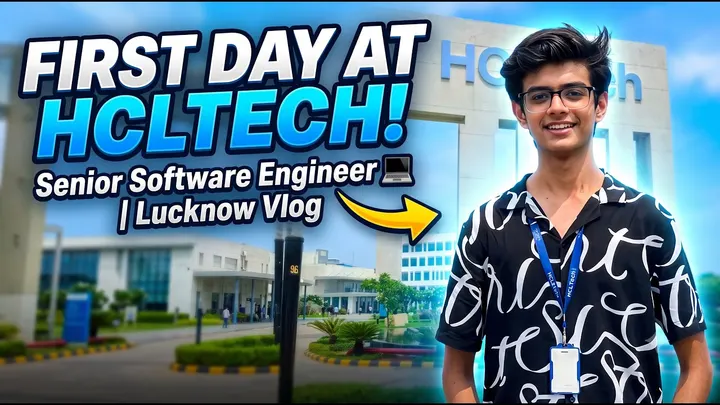
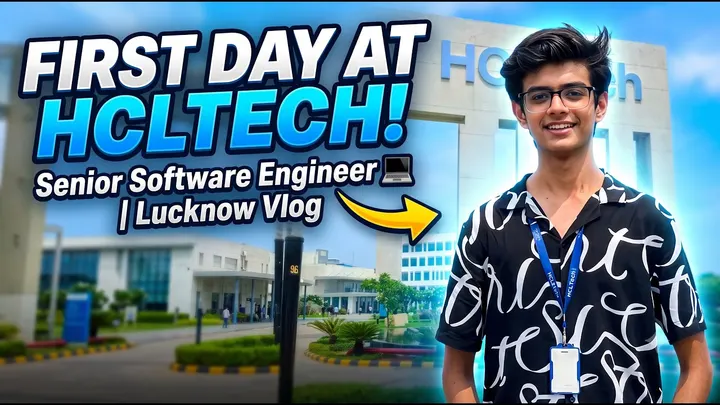
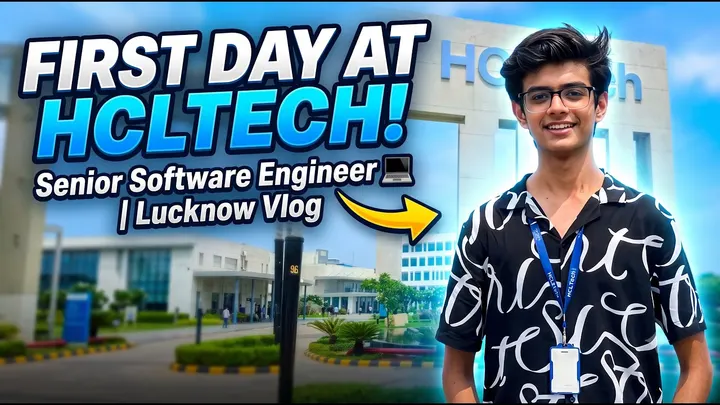
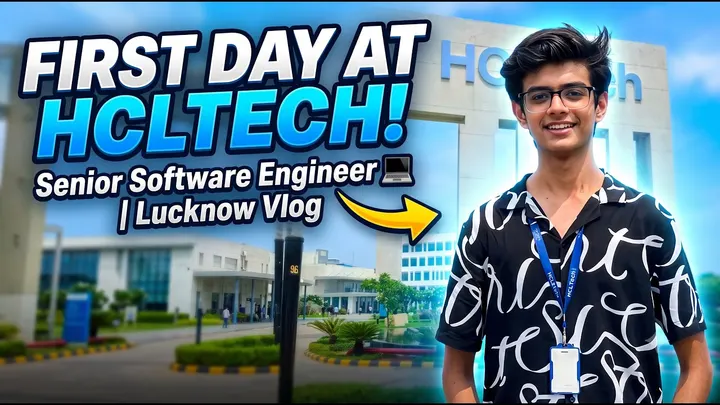
I’ve walked this path myself – from the nervous first day at HCLTech Lucknow to the point where I now mentor juniors on campus placements. If you want a visual feel of that first‑day hustle, check out my video “My First Day at My First Job! 🥹 HCLTech Lucknow Vlog” linked above.
Remember, the transition from campus to corporate isn’t a sprint; it’s a series of small, intentional actions. Keep the checklist handy, stay curious, and don’t be afraid to ask for help. Drop your questions in the comments or ping me on Twitter @lifeofkittukun – I’ll be happy to chat. Good luck, and enjoy the ride!
Found this useful?
Comments
Questions, experiences, thank-yous: all welcome. No sign-up needed.