First months on the job: practical lessons after campus placement
Just landed a campus placement? Discover the daily routines, communication tricks, and growth hacks that turned my first months at HCLTech into a solid foundation for a thriving engineering career.

Chitranshu Rajput
7 min read
The first few weeks at a tech job feel a lot like the first day of a new semester—excitement, a mountain of information, and the nagging question, “Am I doing this right?” If you’re fresh from a campus placement, the reality on the floor can look quite different from the glossy brochure you saw during the drive. Below is the habit‑by‑habit playbook that helped me move from “just hired” to “contributing meaningfully” in the first three months at HCLTech.
Setting realistic expectations
Campus promises vs. day‑to‑day work
Most placement drives highlight big‑picture perks: brand name, salary, and a “fast‑track” career. The actual role usually starts with a handful of tickets, code reviews, and a lot of learning about internal processes. Expecting to own a critical product feature in week 2 is a recipe for disappointment.
What to do:
- Read the job description again after you’ve signed the offer. Highlight the technical stack, primary responsibilities, and any “nice‑to‑have” items.
- Ask your manager (or HR) for the first‑quarter goals they have in mind. Most teams track metrics like ticket count, code‑review turnaround, or bug‑fix turnaround time. Knowing these numbers early lets you gauge whether you’re on track.
Identify early performance metrics
Every engineer, even junior, is measured against something. It could be:
- Number of tickets closed per sprint
- Average time to resolve a bug
- Code‑review feedback ratio (how many comments you receive vs. give)
Write these down in a simple table and revisit it weekly. If you’re unsure, ask a teammate: “What does success look like for a new joiner in the first month?”
Create a 30‑day personal success plan
A personal plan keeps you focused and gives your manager something concrete to discuss during the first check‑in. Use the following template:
| Week | Goal | Action |
|---|---|---|
| 1‑2 | Get comfortable with the codebase | Clone repo, run local setup, read architecture docs |
| 2‑3 | Deliver a small, end‑to‑end feature | Pick a low‑risk ticket, pair with a senior |
| 3‑4 | Own a recurring task (e.g., CI health check) | Document the process, set up alerts |
Keep the plan short—no more than three goals—and share it with your manager for feedback.
Mastering the onboarding process
Navigate tools and documentation efficiently
Most large tech firms have a maze of internal wikis, ticketing systems, CI pipelines, and chat channels. Jumping straight into every tool will overwhelm you.
Step‑by‑step:
- Start with the “Onboarding Checklist” that HR usually sends. Tick off items one by one; it’s a built‑in progress tracker.
- Pick one documentation source (often Confluence or Notion) and search for the architecture overview of the product you’ll work on. Bookmark the page and note any acronyms—these pop up everywhere.
- Set up your dev environment before you touch any ticket. Follow the “Getting Started” guide to the letter; if something fails, create a ticket for the onboarding team instead of Googling endlessly.
Build relationships with teammates and mentors
Your first month is the best time to plant seeds for a supportive network.
- Introduce yourself in the team channel with a brief note: name, background, and one thing you’re excited to learn.
- Schedule a 15‑minute coffee chat with the person who will be your “onboarding buddy.” Prepare two questions—one about the codebase, another about the team’s informal rituals.
- Join the weekly stand‑up early (even if you’re just listening). Note who speaks up, who follows up on tickets, and mimic the cadence.
Leverage onboarding resources for quick up‑skilling
Many companies provide internal courses or subscriptions to platforms like Pluralsight.
- Pick one short course that matches the stack you’ll use (e.g., “Spring Boot basics” if you’re on Java).
- Allocate 30 minutes a day after your core tasks to watch a video or complete a lab.
- Apply what you learn immediately on a sandbox repo—this reinforces the concept far better than passive watching.
Effective communication in a corporate setting
Writing concise emails and status updates
An email that starts with “Hey team,” and ends with “Thanks!” may be polite, but it often buries the key point.
Structure to follow:
- Subject line – a verb + ticket ID (e.g., “Deploy fix #JIRA‑4523 – DB timeout”).
- One‑sentence summary – what you did or need.
- Bullet points (if more than one item) – keep each under 80 characters.
- Action required – “Please review by EOD” or “No action needed.”
If you’re sending a status update for a sprint, limit it to three bullets: what you completed, what’s in progress, blockers.
Speaking up in meetings without over‑talking
Meetings can feel like a battlefield for junior engineers. The trick is to add value, not fill silence.
- Prepare a one‑liner before the meeting: “I noticed the API response time spikes when payload > 1 MB; can we discuss a possible fix?”
- Use the “raise‑hand” feature (or a quick “Can I add something?”) rather than interjecting mid‑sentence.
- If you’re unsure, ask a clarifying question—it shows engagement and often uncovers hidden requirements.
Seeking feedback and acting on it
Feedback is a gift, even when it feels uncomfortable.
- Ask specific questions: “Did my PR meet the team’s coding standards?” instead of “How was my PR?”
- Take notes during the conversation; jot down concrete actions.
- Close the loop within a day: “I’ve refactored the method as you suggested; could you take another look?”
Productivity habits that work
Time‑boxing tasks and using the Pomodoro technique
A common mistake is to start a ticket and get stuck in “analysis paralysis.”
- Break the ticket into sub‑tasks (setup, implementation, testing).
- Assign a Pomodoro (25 min block) to each sub‑task. When the timer rings, take a 5‑minute stretch—this keeps mental fatigue low.
Prioritising high‑impact work over busy‑work
Not every ticket moves the needle.
- Ask your manager which tickets are “must‑deliver” for the upcoming release.
- Label tickets in your board as “High Impact,” “Medium,” or “Low.” Focus on the first two categories during your peak hours (usually morning for most engineers).
Avoiding common distractions in a tech office
Open‑plan offices are great for collaboration but terrible for deep work.
- Use “Do Not Disturb” on Slack when you’re in a Pomodoro session.
- Keep a “quick‑tasks” notebook on your desk for non‑urgent interruptions—so you can revisit them later without losing focus.
Building a growth mindset
Setting short‑term skill goals
Pick a concrete, measurable goal for the first three months, such as “build a microservice using Spring Boot and Docker.”
- Write it down in a personal tracker (Google Sheet or Notion).
- Break it into weekly milestones: week 1 – environment setup; week 2 – basic CRUD API; week 3 – containerisation.
Finding a mentor and scheduling regular check‑ins
A mentor doesn’t have to be a senior manager; a peer who’s been at the company for a year can be just as valuable.
- Identify someone whose work you admire.
- Send a short message: “Hi X, I’m new to the team and would love a 30‑minute chat every month to discuss growth. Would you be open to that?”
- Prepare an agenda for each meeting—progress update, blockers, next steps.
Documenting learnings for future interviews
Every new concept you master is a future interview talking point.
- Create a “Learning Log” (a simple markdown file works).
- Record: date, topic, resources, key takeaways, and a one‑sentence summary of how you applied it.
- Review the log before any interview; you’ll have ready‑made stories about problem‑solving and impact.
Navigating office culture and politics
Understanding informal hierarchies
Beyond the org chart, there are people who influence decisions—senior engineers, product owners, or even the “office coffee champion.”
- Observe who gets consulted when a critical bug pops up.
- Take cues from their communication style (formal vs. informal). Aligning with the informal network speeds up decision‑making.
Balancing teamwork with personal accountability
You’ll be part of a squad, but you’re still responsible for your own deliverables.
- Own your tickets: update status daily, flag blockers early.
- Help teammates when you finish early—offer to review a PR or take a low‑priority bug. This builds goodwill without sacrificing your own goals.
Handling criticism and conflict constructively
Disagreements are inevitable, especially when you’re still learning the codebase.
- Listen first—repeat what the other person said to confirm you understood.
- Ask for specifics: “Could you point me to the part of the spec that suggests a different approach?”
- Propose a compromise and follow up with a written summary to avoid miscommunication later.
Planning the next career step
Evaluating internal mobility options
Large tech firms often let you move across teams after a year. Even in the first six months, you can scout possibilities.
- Browse the internal job board for roles that align with the skills you’re building.
- Talk to HR about the typical timeline for internal transfers.
Preparing for performance reviews
Reviews usually happen quarterly.
- Collect evidence throughout the quarter: PR links, metrics, commendations from peers.
- Map achievements to the company’s core values (e.g., “Customer Obsession,” “Continuous Learning”).
- Draft a self‑assessment a week before the review; keep it factual and concise.
Creating a roadmap for the first year
Think of the first 12 months as three phases:
| Phase | Focus | Milestones |
|---|---|---|
| 0‑3 months | Foundations | Complete onboarding, deliver first feature, get positive feedback |
| 4‑8 months | Depth | Own a medium‑size component, mentor a new intern, publish a tech blog post |
| 9‑12 months | Visibility | Lead a sprint, contribute to a cross‑team project, explore internal mobility |
Revisit this roadmap every quarter and adjust based on what you’ve learned.
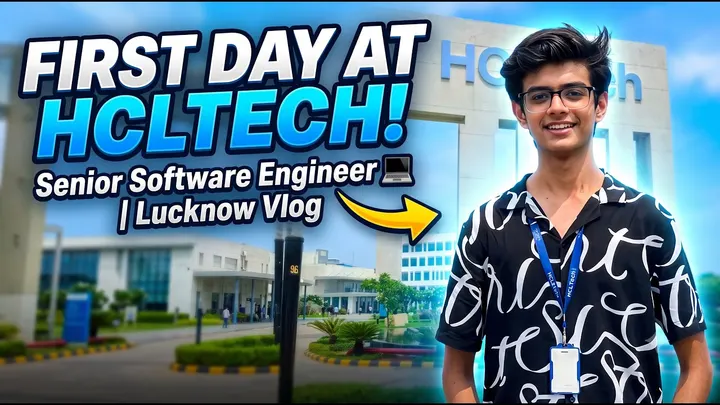
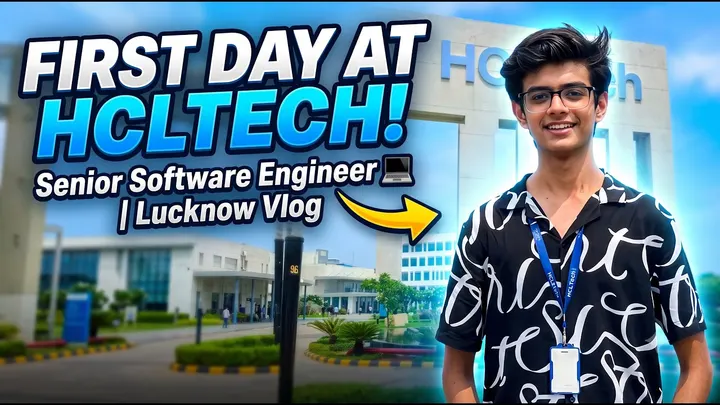
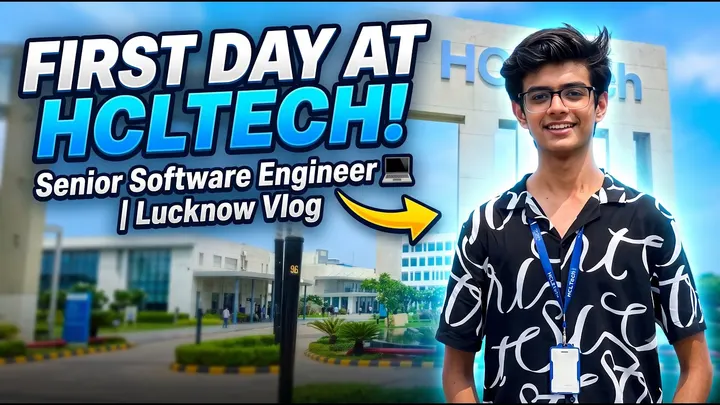
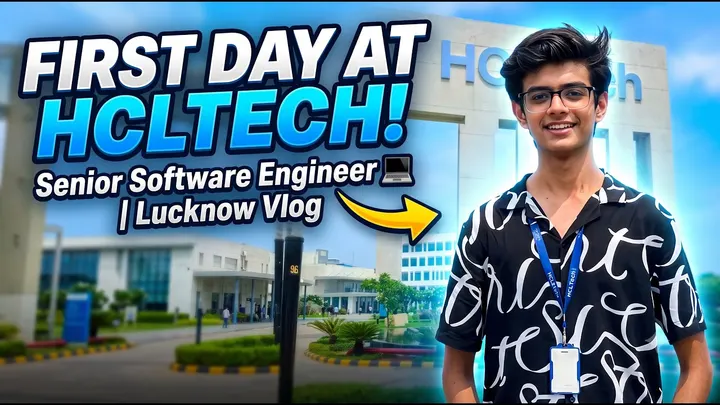
I’ve walked this path myself—starting with a nervous first day at HCLTech Lucknow and ending the first year with a solid portfolio of shipped features. If you’d like a behind‑the‑scenes look at that first day, check out my video “My First Day at My First Job! 🥹 HCLTech Lucknow Vlog” linked above.
Feel free to drop your questions in the comments or share how your own onboarding went. Remember, the first months are a marathon of tiny wins; keep adding them up, and the finish line will appear sooner than you think. Happy coding!
Found this useful?
Comments
Questions, experiences, thank-yous: all welcome. No sign-up needed.