Top Non‑MEXT Fully Funded Scholarships for Indian Students in Japan
Discover five fully funded Japanese scholarships you can apply for today—no MEXT required. Learn eligibility, deadlines, required documents, and how to craft a standout application.

Chitranshu Rajput
10 min read
When you start googling “Japan scholarship for Indians”, the first thing that pops up is the MEXT program. It’s a great route, but it’s also highly competitive, has a rigid timeline and often limits you to certain fields or universities. If your CGPA is a little below the cut‑off, you’re looking at a specific research area, or you simply want more flexibility, you’ll quickly feel the need for alternatives.
Below is a practical rundown of five fully‑funded Japanese scholarships that fly under the radar. I’ve tried each of them (or helped juniors do so) and will share what really matters – eligibility, the exact steps you need to take, and a few insider tricks that keep your application from getting lost in a sea of PDFs.
Why Look Beyond MEXT?
The limits you’ll hit
- Fixed intake windows – MEXT usually opens only once a year, and the deadline is a hard stop. Miss it, and you wait another 12 months.
- Program rigidity – Most MEXT slots are tied to specific universities and departments. Switching labs or adding a short‑term internship later is tough.
- Stringent academic thresholds – A CGPA around 8.0/10 (or 3.5/4.0) is often the minimum, and many Indian students fall just short.
What alternatives give you
- Multiple rounds – Many of the scholarships below accept applications twice a year or run rolling admissions, giving you more leeway.
- Broader eligibility – Some focus on technical training, others on post‑doctoral research, and a few are open to B.Tech‑level graduates.
- Tailored funding – You can pick a scholarship that covers exactly what you need – travel, living allowance, tuition, even a short‑term stipend for a summer project.
What the funding usually includes
| Component | Typical coverage (varies by program) |
|---|---|
| Tuition / university fees | 100 % (often waived) |
| Monthly stipend | Around ₹1.5‑2.5 L per year (adjusted for cost of living) |
| Travel (airfare) | Round‑trip economy class |
| Insurance & health | Basic coverage for the duration |
| Research/Project grant | Small amount for materials or conference travel (post‑doc only) |
Always double‑check the latest details on the official site – numbers can shift with exchange rates.
JSPS Postdoctoral Fellowship (Short‑Term)
Who can apply?
- Indian nationals who have completed a Ph.D. (or are within six months of finishing) in science, engineering, or medicine.
- You don’t need a prior Japan connection, but a solid publication record (2–3 first‑author papers) helps the host professor say “yes”.
Funding snapshot
- Monthly allowance – roughly ₹1.8‑2.2 L (adjusted for the city).
- Travel – round‑trip airfare covered once.
- Health insurance – provided for the fellowship period (usually up to 2 years).
Finding a host professor
- Identify research groups whose work matches your thesis. Use Google Scholar, ResearchGate, or the university’s lab pages.
- Read recent papers – note the methods you’re comfortable with.
- Craft a concise email (see box below). Keep it to three short paragraphs: intro, why you’re interested, and what you can bring.
- Attach: CV (one page), list of publications, and a short research proposal (≤ 500 words).
Sample cold‑email snippet
Subject: Postdoctoral opportunity – Dr. X’s work on perovskite solar cells

Dear Prof. X,

I am completing my Ph.D. in Materials Engineering at NSUT Delhi, focusing on thin‑film deposition for photovoltaic devices. Your recent paper on mixed‑cations perovskites (Adv. Funct. Mater., 2023) aligns closely with my work on interface engineering.

I would be thrilled to discuss a short‑term JSPS postdoctoral fellowship under your guidance. I have attached my CV and a brief proposal outlining a possible collaboration on stability testing.

Thank you for considering,
Chitranshu Rajput
Application steps
| Step | What to do | Deadline cue |
|---|---|---|
| 1. Host agreement | Secure a written “Letter of Invitation” from the professor. | As soon as you get a positive reply. |
| 2. JSPS online portal | Fill personal details, upload CV, proposal, host letter. | Typically 2‑3 months before the start date. |
| 3. Submit supporting docs | Transcripts, passport copy, recommendation letters (2). | Follow portal prompts. |
| 4. Review & interview | Some programs ask for a short video interview. | Be ready within a week of invitation. |
| 5. Acceptance | If selected, JSPS sends the official award letter; you’ll apply for the visa. | Allow 4‑6 weeks for processing. |
Insider tip: Professors often have a “JSPS budget” they can allocate only once a year. If you hear the host say “we have a slot for 2025”, lock it in quickly – the internal deadline is usually earlier than the public one.
Nagoya University G30 Scholarship
What it is
The G30 (Global 30) program is Nagoya University’s answer to attracting high‑performing international students. It offers a fully funded master’s or Ph.D. slot in selected engineering and science departments, with English‑medium instruction.
Fields covered
- Electrical & Mechanical Engineering
- Materials Science
- Life Sciences & Biotechnology
- Information Science
Academic & language criteria
| Requirement | Typical threshold |
|---|---|
| CGPA | ≥ 7.5 / 10 (or 3.0 / 4.0) – a little lower than MEXT’s usual cut‑off. |
| English | TOEFL iBT ≥ 80 or IELTS ≥ 6.0 (some departments accept a university‑issued English certificate). |
| Japanese | Not mandatory for most G30 courses, but a basic JLPT N5 helps with daily life. |
Application checklist
- Online application form – Nagoya’s portal (create an account, fill personal data).
- Academic transcripts – scanned PDFs, certified if required.
- Statement of Purpose (500‑700 words) – explain why Nagoya, your research interests, and future goals.
- Two recommendation letters – one from your thesis supervisor, another from a faculty member who knows your work.
- Proof of English proficiency – upload the score report.
- Research proposal (if applying for Ph.D.) – 1 page, clear objectives, methodology, and expected outcomes.
Timeline (typical pattern)
| Phase | Approx. timing |
|---|---|
| Opening of applications | Early April (for autumn intake) and early October (for spring intake). |
| Document submission deadline | 1 month after opening. |
| Interview (online) | 2–3 weeks after deadline. |
| Final decision | 1 month after interview. |
Pro tip: Nagoya’s admissions team often asks for a short video (2 min) introducing yourself. Treat it like a mini‑interview: clear background, why you chose the program, and a quick hobby mention – it humanises you beyond the paper.
JICA Scholarships for Technical Training
Who should consider this?
- Recent graduates (B.Tech or B.Sc.) looking for hands‑on industry training rather than a research degree.
- Students from engineering, IT, agriculture, or health technology backgrounds.
- Those who prefer a short‑term stay (3‑12 months) with a clear skill‑building outcome.
What’s covered
| Item | Coverage |
|---|---|
| Tuition / training fees | 100 % (the host institute’s fee). |
| Monthly stipend | Roughly ₹1.2‑1.5 L (adjusted to Japan’s cost of living). |
| Travel | Round‑trip economy airfare. |
| Accommodation | Provided by the host company or a dormitory (often shared). |
| Insurance | Basic health and accident coverage. |
Step‑by‑step application
- Choose a training program – JICA’s website lists categories (e.g., “Advanced Manufacturing”, “IT Systems”). Pick one that matches your diploma.
- Check eligibility – Indian nationals, age 20‑35, with a minimum of a 3‑year undergraduate degree.
- Prepare documents – CV, academic transcripts, a one‑page “Training Plan” outlining what you hope to learn, and a copy of your passport.
- Submit through the JICA India office – either online or at the nearest regional office (Delhi, Mumbai, Kolkata).
- Written test & interview – JICA conducts a short aptitude test (often English‑based) followed by a panel interview.
- Host selection – If you pass, JICA matches you with a Japanese company or institute and sends the official award letter.
Insider tip: JICA often prioritises candidates who can bring the learned skill back to India, such as working in a public sector undertaking or a start‑up. Mention any concrete plan you have for post‑training impact in your training plan.
University‑Specific Grants (Osaka, Kyushu, and Others)
A quick look at notable programmes
| University | Scholarship name | Funding scope | Typical duration |
|---|---|---|---|
| Osaka University | Osaka University International Graduate Program (OUIGP) Scholarship | Tuition + monthly stipend (~₹1.8 L/yr) + travel | 2 years (master) / 3 years (Ph.D.) |
| Kyushu University | Kyushu University International Scholarship for Graduate Students | Full tuition, stipend (~₹2 L/yr), travel | 2‑4 years |
| Hokkaido University | Hokkaido University Graduate Fellowship | Tuition waiver, stipend (~₹1.6 L/yr) | 2‑3 years |
| Tohoku University | Tohoku University International Scholarship | Tuition + stipend + travel | 2‑5 years |
How they differ
- Funding amount – Some universities give a slightly higher stipend, especially in Hokkaido (higher living costs).
- Duration – Most cover the entire degree; a few are limited to the first year with a renewal based on performance.
- Language requirement – Osaka and Kyushu often accept English‑medium applicants, but a basic Japanese exam (JLPT N4/N5) can boost your chances.
Contacting the international office
- Visit the university’s “International Students” page – look for a PDF titled “Scholarship Guidelines”.
- Email the International Relations Office – use a subject line like “Inquiry: Graduate Scholarship for Indian Applicant – 2025”. Keep the body under 150 words, mention your field, CGPA, and that you’ve read the guidelines.
- Ask for a “Scholarship Application Kit” – many offices will send you a checklist and sample forms.
Pro tip: When you email, attach a one‑page “profile” (photo, name, degree, CGPA, language scores). It makes it easier for the admin staff to forward you to the right department.
Corporate‑Funded Programs (Toyota Woven, HENNGE, etc.)
What sets them apart
- Work component – You’ll spend part of the scholarship period (usually 3‑6 months) interning or working on a project at the company.
- Industry exposure – Direct access to cutting‑edge R&D labs, product teams, and sometimes a pathway to a full‑time job.
- Higher stipend – Because the company saves on recruitment costs, the monthly allowance can be a notch above university scholarships.
Eligibility snapshot
| Company | Typical eligibility |
|---|---|
| Toyota Woven City Internship | B.Tech/M.Tech graduates in robotics, AI, or civil engineering; CGPA ≥ 7.0; basic English. |
| HENNGE Cloud Engineer Fellowship | Computer Science or IT graduates; strong coding portfolio; willingness to work on cloud security. |
| Rakuten Global Internship | Any engineering discipline; Japanese language not mandatory; interest in e‑commerce tech. |
Crafting a resume that catches recruiters
- Start with a headline – “Electrical Engineering graduate with 2 years of IoT project experience”.
- Quantify achievements – “Reduced prototype power consumption by 15 %”.
- Showcase relevant tools – List software/hardware (e.g., ROS, TensorFlow, SolidWorks).
- Add a “Projects” section – Brief bullet points (problem, approach, result).
- Keep it to one page – Recruiters skim fast; extra pages are a red flag.
Application flow (generic)
- Online application portal – Upload CV, cover letter, and any required project reports.
- Aptitude test – Usually a mix of logical reasoning and basic technical questions.
- Technical interview – One or two rounds focusing on your past projects and problem‑solving style.
- HR interview – Cultural fit, motivation to work in Japan, and willingness to relocate.
- Offer & visa support – The company typically handles the visa paperwork and provides a stipend agreement.
Insider tip: Mention any Japanese language self‑study (even if you’re at N5 level). Companies appreciate candidates who show cultural curiosity.
Common Application Pitfalls and How to Avoid Them
| Pitfall | Why it hurts | Fix it |
|---|---|---|
| Missing documents – e.g., forgetting the passport copy. | Application is rejected automatically. | Create a master checklist for each scholarship; tick off every item before uploading. |
| Generic statements – “I love Japan”. | Admissions panels see it as filler. | Tie your motivation to a specific professor, lab, or project you’ve read about. |
| Late submission – submitting a day after the deadline. | Most programmes are strict; no extensions. | Set internal deadlines 3‑4 days before the official one and use calendar reminders. |
| Weak recommendation letters – vague praise. | They carry little weight. | Ask your referee to include concrete examples (e.g., “led a team of 5 to design a low‑cost sensor”). Provide them a bullet list of achievements to reference. |
| Poor formatting – inconsistent fonts, large PDFs. | Makes it look unprofessional and can cause upload errors. | Use a clean template (single‑column, 11‑pt Calibri), keep PDFs under 2 MB, and preview before submitting. |
Timing and follow‑up
- Send a polite “thank you” email after an interview – reiterate your enthusiasm in 2‑3 lines.
- If you haven’t heard back after the stated decision window, a brief email (“I wanted to check on the status of my application…”) is acceptable. Avoid multiple follow‑ups; one is enough.
Leveraging recommendation letters
- Ask early – give your referee at least 3 weeks.
- Provide a “letter brief” – a one‑page document summarizing your projects, grades, and why you’re applying.
- Request a sealed PDF if the scholarship requires a signed original (most accept scanned copies now).
Next Steps: Building Your Timeline
A 12‑month action plan (example)
| Month | Milestone |
|---|---|
| 1‑2 | Identify target scholarships; list eligibility gaps (CGPA, language). |
| 3 | Register for TOEFL/IELTS if needed; start basic Japanese (Duolingo or N5 prep). |
| 4‑5 | Reach out to potential host professors (JSPS) or university contacts (G30, OUIGP). |
| 6 | Gather transcripts, draft SOPs, and request recommendation letters. |
| 7 | Submit first round of applications (e.g., JICA, corporate fellowships). |
| 8‑9 | Prepare for interviews – mock sessions with peers, refine your pitch. |
| 10 | Follow up on pending applications; apply for second round if available. |
| 11‑12 | Receive offers, decide, and start visa paperwork. Begin Japanese language immersion (watch NHK, practice speaking). |
Language prep resources
- NHK Easy News – short articles with furigana; good for daily reading.
- Tae Kim’s Grammar Guide – free online, covers basics up to N4 level.
- HelloTalk or Tandem – find Japanese language partners; aim for 15 min conversation daily.
Finding mentorship and peer support
- Life of KittuKun Discord – a community of Indian students currently in Japan; channels for each scholarship.
- LinkedIn groups – “Indian Scholars in Japan” has active alumni willing to answer queries.
- Alumni webinars – many universities host virtual Q&A sessions; register early.
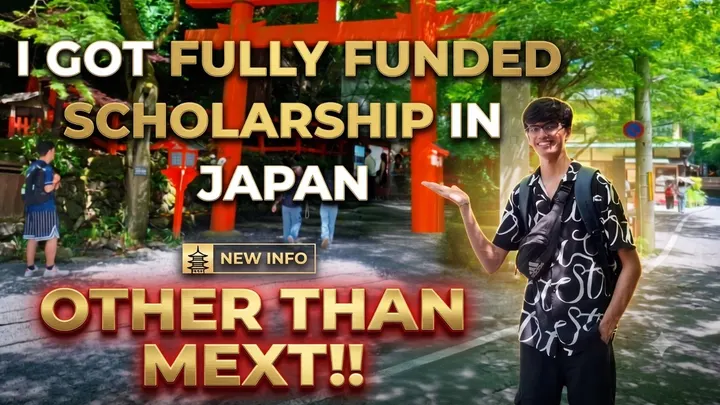
If you’re still unsure which path fits you best, check out my video “🇯🇵 I Got a 100% Fully Funded Scholarship to Japan Not MEXT!” – I walk through the exact documents I used and the email threads that landed me a spot. Drop your questions in the comments there, or ping me on the blog’s comment section.
Good luck, and remember: the right scholarship is out there – you just need the right plan to reach it. Happy applying!
Found this useful?



Comments
Questions, experiences, thank-yous: all welcome. No sign-up needed.