Hidden fully funded Japan scholarships beyond MEXT
Discover the most reliable fully funded Japanese scholarships that aren’t MEXT, learn eligibility hacks, required documents, and a clear timeline to boost your chances of studying in Japan for free.

Chitranshu Rajput
9 min readUpdated 2 views
Japan has a reputation for offering generous scholarships, but the MEXT program isn’t the only door that opens to a fully‑funded stay.
If you’ve already hit a wall with MEXT deadlines, low‑CGPA cut‑offs, or a field that isn’t on the list, you’re not alone. Many Indian students land full funding through university‑run or corporate‑backed schemes that are less crowded and often more flexible about research topics.
Below is a practical, step‑by‑step guide to the most reliable non‑MEXT scholarships, what they actually cover, and how you can turn a modest CGPA into a ticket to Japan.
Why look beyond MEXT?
Quotas and timing make MEXT a moving target
MEXT allocates a fixed number of slots each year, and the competition spikes around the same time every spring. Even if you meet the academic criteria, the sheer volume of applications means the odds shrink dramatically. Moreover, the programme usually opens for applications in February–April, which clashes with many Indian college exam schedules.
Alternative scholarships give you breathing room
- Field flexibility – Some corporate or university scholarships accept engineering, design, data‑science, even humanities, whereas MEXT often sticks to a predefined list.
- University ties – A scholarship tied to a specific university (e.g., Nagoya G30) can guarantee you a seat in a department that already has a lab ready for you.
- Corporate backing – Programs like the Toyota Woven City Internship or Mitsui & Co. Scholarship come with industry exposure, networking events, and sometimes a job pipeline after graduation.
What does “fully funded” usually mean?
Most of the schemes listed below cover:
| Item | Typical coverage |
|---|---|
| Tuition & university fees | 100 % |
| Monthly stipend (living costs) | 150 k–250 k JPY (≈ ₹1.2–₹2 Lakh) |
| Round‑trip airfare | Yes (economy) |
| Health insurance | Yes (through university or sponsor) |
| Research/Project budget | Varies, often up to 500 k JPY |
Exact numbers change each year, so always double‑check the official site.
Top non‑MEXT fully funded scholarships
1. Japan Society for the Promotion of Science (JSPS) Postdoctoral Fellowship
Who it’s for: Recent PhD graduates (or those about to defend) who want to conduct research under a Japanese professor.
Funding: Monthly allowance (≈ ¥150 k), travel grant, research‑related expenses.
Why it’s attractive: No CGPA ceiling; the focus is on your research record and the host professor’s endorsement.
2. Japan‑India Science and Technology (JIST) Scholarship
Who it’s for: Indian under‑grads or post‑grads in STEM fields.
Funding: Tuition, ¥180 k/month stipend, round‑trip ticket, and a modest research allowance.
Unique perk: The program is a joint effort between JSPS and the Indian Ministry of Science & Technology, so you get a smooth visa process.
3. Asia Bridge Program (ABP)
Who it’s for: Students aiming for a master’s degree in engineering, ICT, or life sciences.
Funding: Full tuition, ¥200 k/month stipend, travel, and a one‑year research grant.
Tip: ABP partners with a handful of Japanese universities that actively recruit Indian talent, so you can apply directly through the university portal.
4. Mitsui & Co. Scholarship for Indian Students
Who it’s for: Under‑grads in business, economics, or technology‑management streams.
Funding: Tuition, ¥150 k/month stipend, travel, plus a short‑term industry project.
Edge: The corporate link often leads to a summer internship at Mitsui, adding a strong resume bullet.
5. Nagoya University G30 Scholarship
Who it’s for: Students accepted into Nagoya’s Global 30 (G30) English‑taught master’s programmes.
Funding: Full tuition, ¥180 k/month stipend, travel, and a one‑time settlement allowance.
How to win: Secure admission first; the scholarship is automatically considered for all G30 admits, but you still need to submit a concise statement of purpose.
6. Toyota Woven City Internship (full stipend + travel)
Who it’s for: Final‑year under‑grads or master’s students in robotics, AI, or sustainable design.
Funding: ¥250 k/month stipend, round‑trip airfare, accommodation in Woven City.
Note: This is an internship, not a degree programme, but the stipend covers living costs for the entire 6‑month period, making it equivalent to a scholarship.
7. HENNGE Global Internship (full funding)
Who it’s for: Tech‑savvy students (CS, data‑science, cloud computing).
Funding: ¥200 k/month stipend, travel, housing stipend, plus a mentorship programme.
Why consider it: HENNGE partners with several Japanese universities, so you can combine the internship with a short‑term research project.
Eligibility checklist for Indian applicants
| Criterion | Typical requirement | How to meet it |
|---|---|---|
| Academic standing | CGPA ≥ 6.5/10 for most scholarships; some (JSPS, JIST) focus on research output rather than CGPA. | If your CGPA is lower, boost your profile with publications, conference papers, or a strong project portfolio. |
| Year of study | Undergraduate (final year) or postgraduate (1st/2nd year). | Align your application with the semester you’ll graduate; many programmes accept students who will finish within the next 6 months. |
| Language | Either JLPT N2/Japanese proficiency or proof of English‑medium instruction (most G30 & corporate scholarships accept English). | If you lack JLPT, prepare a short statement explaining you’ll take a Japanese language course on arrival. |
| Research/field alignment | Must match the sponsor’s focus (e.g., robotics for Toyota, economics for Mitsui). | Identify a professor or lab whose work resonates with the sponsor’s industry; mention that match in your SOP. |
| Citizenship & financial need | Indian passport, no dual citizenship. Most scholarships do not require proof of financial need, but you must be able to travel on your own initially. | Keep a copy of your passport, Aadhaar, and a simple bank statement ready. |
Application timeline and required documents
| Scholarship | Typical opening | Typical deadline | Core documents |
|---|---|---|---|
| JSPS Postdoc | September | December (first round) | Research proposal (2 pages), CV, 2 recommendations, host professor invitation letter |
| JIST | January | March | SOP (500 words), academic transcript, English proficiency proof, 2 recommendations |
| ABP | March | May | University‑specific application, research plan, CV, passport copy |
| Mitsui | April | June | Business‑oriented SOP, transcript, statement of career goals, 2 recommendations |
| Nagoya G30 | May (through university) | July (university deadline) | Admission form, English‑medium transcript, personal statement, recommendation |
| Toyota Woven City | Ongoing (rolling) | 1‑month notice before start | CV, project brief, portfolio (if design), passport copy |
| HENNGE Internship | Rolling | 2 weeks before internship start | CV, coding portfolio, short motivation (300 words), recommendation |
How to tailor documents
- Read the sponsor’s “mission” – each programme lists key themes (e.g., “sustainable mobility” for Toyota). Mirror those exact words in your SOP.
- Use the same format for every document – same header (Name, Contact, Application ID) and font; it shows attention to detail.
- Highlight Indian context – mention how your background (e.g., working on low‑cost solar in rural India) can add value to the Japanese host.
Getting university endorsement
- Start early – approach your department head at least two months before the scholarship deadline.
- Provide a one‑pager summarizing the scholarship, why you’re a fit, and the exact endorsement wording they need to sign.
- Follow up politely – a short email reminder a week before the deadline works wonders.
Crafting a standout application
Motivation letter without the fluff
- Open with a specific incident – “When I built a low‑cost water‑purifier for my village, I realized …”
- Connect to the sponsor – “Toyota’s Woven City aims to create a living lab for sustainable tech; my project on … aligns perfectly.”
- Close with a concrete contribution – “I plan to publish two joint papers and present at the IEEE IoT conference during my stay.”
Research proposal that hits the mark
- Title (≤ 12 words) – clear and jargon‑free.
- Problem statement (150 words) – why the issue matters globally and in Japan.
- Methodology (300 words) – step‑by‑step plan, tools you’ll use, and expected outcomes.
- Sponsor alignment (100 words) – explicitly state how the project supports the scholarship’s goals.
- Timeline (Gantt‑style, 6‑month view) – shows you can finish within the funding period.
Leveraging extracurriculars
- List any hackathons, open‑source contributions, or community projects that demonstrate teamwork and initiative.
- For corporate scholarships, highlight any internship or part‑time work in a related industry.
Common pitfalls and fixes
| Pitfall | Why it hurts | Fix |
|---|---|---|
| Generic “I love Japan” line | Shows you haven’t researched the sponsor | Replace with a fact about the sponsor’s recent project and link it to your goal. |
| Over‑long CV (> 2 pages) | Recruiters skim; important info gets lost | Keep it to one page for scholarships; add a detailed annex only if requested. |
| Missing host professor’s letter (JSPS) | Application rejected outright | Reach out 3‑4 months early; propose a 2‑page draft they can edit. |
| Ignoring language requirement | Visa may be denied | Mention your plan to enroll in a JLPT N2 prep course upon arrival. |
Visa, travel and pre‑departure checklist
| Item | What to do |
|---|---|
| Visa category | Most scholarships issue a Student (College) visa; internships may require a Temporary (Business) visa. Check the sponsor’s invitation letter for the exact type. |
| Health insurance | Enroll in the university’s National Health Insurance (NHI) within two weeks of arrival; the fee is usually covered by the stipend. |
| Accommodation | University dorms are cheapest (≈ ¥30 k/month). For internships, sponsors often arrange shared apartments. Book a short‑term Airbnb for the first week to settle in. |
| Budget for arrival month | Set aside ₹30 k–₹45 k for initial transport, groceries, and a SIM card. Your stipend will cover the rest. |
| Cultural prep | Watch “Japanese Etiquette for Newcomers” (free on YouTube), download the “NHK World” app for news, and learn basic greetings (ありがとう, おはよう). |
| Documents to carry | Passport (valid ≥ 6 months), scholarship award letter, visa, passport‑size photos, COVID‑19 vaccination proof, and a printed copy of your admission/host letter. |
Real student stories and success metrics
| Scholarship | Student (Year) | Background | What set them apart |
|---|---|---|---|
| JSPS Postdoc | Rohan, 2023 | PhD in Materials Science, CGPA 7.2 | Secured a strong host professor who co‑authored a paper with him; proposal directly built on the professor’s recent Nature article. |
| JIST | Priya, 2022 | B.Tech (Electronics), CGPA 6.8 | Highlighted a senior project on low‑cost IoT sensors for Indian farms; matched JIST’s “India‑Japan tech collaboration” theme. |
| ABP | Sameer, 2024 | MSc in Bio‑Engineering, CGPA 6.5 | Submitted a concise 2‑page research plan and a video pitch (30 sec) – the selection panel praised the “clear communication”. |
| Mitsui | Ananya, 2023 | BBA (Finance), CGPA 7.0 | Emphasised her internship at a fintech startup and linked it to Mitsui’s “digital finance” initiative. |
| Nagoya G30 | Karan, 2022 | B.E. (Computer Science), CGPA 7.4 | Got admission first, then the scholarship auto‑granted; he kept his SOP focused on AI for disaster management, a current research thrust at Nagoya. |
| Toyota Woven City | Meera, 2024 | Final‑year Mech Eng, CGPA 6.9 | Showed a portfolio of CAD models for autonomous vehicles; her interview included a live demo of a ROS simulation. |
| HENNGE | Arjun, 2023 | B.Tech (IT), CGPA 6.7 | Submitted a GitHub repo with a cloud‑security tool; the recruiter highlighted “real‑world impact”. |
Success rates – While exact numbers aren’t published, alumni groups on LinkedIn suggest roughly 1‑2 % of all applicants secure a spot, compared with 0.2‑0.3 % for MEXT. The higher rate comes from lower applicant volume and niche focus.
Where to find mentors
- LinkedIn groups: “Japan Scholarships for Indian Students” (≈ 4 k members).
- Alumni portals: JSPS and JIST maintain alumni directories; you can request a brief chat.
- University International Offices: Most Indian institutes keep a list of past scholars; ask the placement cell.
If you’re ready to start, pick the scholarship that aligns best with your field, mark the opening dates on your calendar, and begin gathering the documents today.
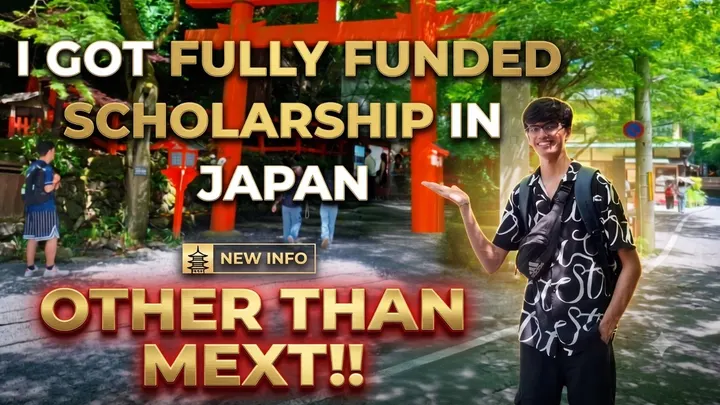
My video “🇯🇵 I Got a 100% Fully Funded Scholarship to Japan Not MEXT!” walks through the same checklist with screenshots of each portal – give it a watch for a visual walk‑through.
Good luck, and feel free to drop your doubts in the comments; I’ll try to answer them personally. Happy applying!
Found this useful?



Comments
Questions, experiences, thank-yous: all welcome. No sign-up needed.