Hidden corporate‑funded scholarships to study in Japan
Discover the best corporate‑backed Japanese scholarships for Indian students, learn eligibility, deadlines, and step‑by‑step application tactics to secure a fully funded spot.

Chitranshu Rajput
7 min readUpdated 3 views
Japan is a top destination for Indian engineers, but the word “MEXT” dominates every search result.
If you’re wondering whether there are other fully‑funded routes that also give you a foot in the industry, the answer is a big yes. Several Japanese corporations run scholarship programmes that cover tuition, living costs and even a stint at the company itself. Below is a practical guide to the most visible corporate‑funded scholarships for 2025‑26 and exactly how you can apply.
Why consider corporate‑funded scholarships
Benefits over the regular MEXT route
MEXT is generous, but it is also highly competitive and often tied to a specific university or research theme. Corporate scholarships tend to be a little less crowded and they come with extra perks:
- Direct industry exposure – many programmes include a short‑term internship or a mentorship component inside the sponsoring firm.
- Clear career pathways – companies frequently keep top scholars on their bench for full‑time roles after graduation.
- Flexibility in university choice – you can pick any Japanese university that satisfies the scholarship’s academic criteria, rather than being limited to a pre‑approved list.
Industry exposure and career pathways
Working even a few weeks on a real product line or research project can turn a fresh graduate into a hireable candidate. Companies such as Toyota, Rakuten and HENNGE treat the scholarship as a talent‑pipeline, so you’ll often get a chance to meet senior engineers, attend internal tech talks and understand corporate R&D culture.
Top corporate scholarships available in 2025‑26
| Scholarship | Sponsor | What’s covered | Typical focus |
|---|---|---|---|
| Mitsui Scholarship | Mitsui & Co. | Tuition, monthly stipend, travel, health insurance, optional internship | Business‑tech integration, data analytics, sustainability projects |
| Toyota Woven Internship Scholarship | Toyota (Woven City) | Full tuition, living allowance, 8‑week paid internship in Woven City | AI, robotics, smart‑city solutions |
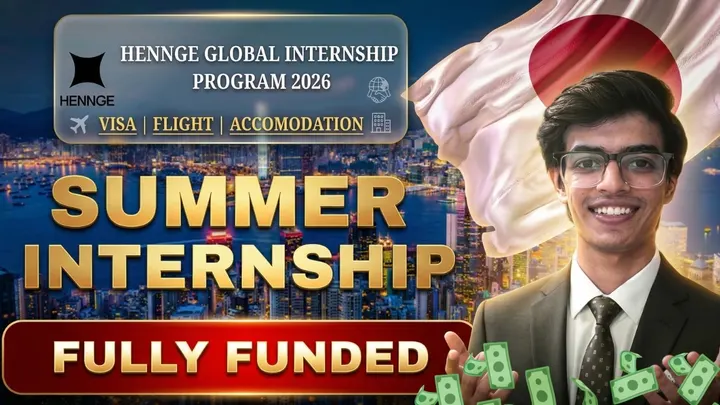
| HENNGE Global Internship Scholarship | HENNGE (cloud‑security startup) | Tuition, monthly stipend, 12‑week internship in Tokyo | Cloud security, DevOps, SaaS product development |
| Rakuten Global Scholarship | Rakuten | Tuition, stipend, travel, mentorship with Rakuten engineers | E‑commerce tech, fintech, AI/ML |
| SoftBank Academic Grant | SoftBank Group | Tuition, stipend, optional research visit to SoftBank labs | Telecommunications, IoT, next‑gen networking |
All of these programmes are fully funded for the duration of a master’s degree (typically 2 years). Some also allow you to start with a short‑term research stay before the full program begins.
Eligibility and selection criteria
Academic requirements
- Minimum CGPA around 7.0/10 (or equivalent). A strong performance in core engineering subjects is a must.
- You should have completed a bachelor’s degree in engineering, computer science, physics or a closely related field.
Language proficiency
- Most scholarships accept IELTS 6.5 or TOEFL iBT 80 as the minimum.
- If you plan to study in Japanese‑medium programs, a JLPT N2 is often required, but many corporate scholarships allow you to enroll in English‑taught tracks.
Extra‑curricular and leadership factors
- Participation in hackathons, open‑source projects, or relevant internships adds weight.
- Leadership roles in clubs, student bodies, or community service are looked at positively.
Nationality and residency rules
- All the scholarships listed are open to Indian citizens studying abroad.
- You must hold a valid Indian passport; permanent residency elsewhere can be a disqualifier for some programmes, so double‑check the FAQ on the sponsor’s site.
Step‑by‑step application process for each scholarship
Below is a consolidated checklist, followed by programme‑specific notes.
Common checklist for every corporate scholarship
- Create an account on the official portal – keep your login details safe; you’ll need them for multiple uploads.
- Gather academic transcripts – PDF, scanned, and certified if required.
- Prepare language test scores – upload the official score report (IELTS/TOEFL/JLPT).
- Write a 500‑word personal statement – see the “Crafting a winning application” section for tips.
- Two recommendation letters – one academic (professor) and one professional (internship supervisor or project mentor).
- Resume (max 2 pages) – focus on technical projects, tools used, and outcomes.
- Passport copy & photo – ensure the photo follows the visa‑photo guidelines.
- Proof of financial independence (if required) – some sponsors ask for a bank statement to confirm you can cover any incidental costs.
Mitsui Scholarship
- Visit Mitsui Scholarship Portal and click Apply Now.
- Choose the “Master’s – Business‑Tech” track.
- Upload the checklist items above.
- Key date: Application window usually opens in early March and closes late May.
- After submission, you’ll receive an online assessment (case‑study based) within two weeks.
Toyota Woven Internship Scholarship
- Register on Toyota Woven Careers.
- Select “Master’s with Internship”.
- Provide a short video (max 2 min) explaining why you want to work on smart‑city tech – this is a unique requirement.
- Key date: Applications run from April to June.
- Shortlisted candidates are invited for a virtual interview with a Woven City engineer.
HENNGE Global Internship Scholarship
- Go to HENNGE Scholarships and click Apply.
- Fill the form, then upload a GitHub/GitLab profile link – they assess open‑source contributions.
- Key date: Applications open in May; deadline is early August.
- Successful applicants receive a 12‑week paid internship before starting the master’s program.
Rakuten Global Scholarship
- Access Rakuten Global Scholarship Page.
- Choose “Engineering & AI”.
- Submit a 300‑word essay on “How technology can empower e‑commerce in emerging markets”.
- Key date: Applications accepted from June to September.
- Final round includes a technical test on data structures and algorithms.
SoftBank Academic Grant
- Navigate to SoftBank Grants.
- Pick “Telecommunications & IoT”.
- Upload a research proposal (max 1000 words) outlining a potential project you’d like to pursue at SoftBank labs.
- Key date: Application window runs from July to October.
- Review panel may request a brief presentation via Zoom.
Crafting a winning application
Tailoring motivation letters to corporate values
Each company publishes a set of core values—Mitsui talks about “Sustainability & Innovation”, Toyota stresses “Society 5.0”, HENNGE emphasizes “Security & Openness”. Mirror those words in your essay, but back them up with concrete examples:
“During my final year project on energy‑efficient routing, I applied the sustainability principle championed by Mitsui, reducing simulated power consumption by 18 %.”
Avoid generic statements like “I love Japan”; instead link your goal to the sponsor’s mission.
Highlighting relevant projects
Create a “Key Projects” subsection in your resume. For each entry, list:
- Problem – what you were solving.
- Approach – tools, frameworks, algorithms used.
- Result – measurable impact (e.g., “improved inference speed by 30 %”).
If you have a GitHub repo, include the link; recruiters love to see code.
Securing strong recommendation letters
Ask your professor early (at least a month before the deadline). Provide them with:
- Your updated CV.
- A brief note on the scholarship you’re targeting and the qualities the sponsor values.
- A draft paragraph they can adapt – this saves them time and ensures relevance.
Common pitfalls to avoid
| Pitfall | How to fix it |
|---|---|
| Submitting a generic personal statement | Use the corporate value keywords and tie them to a specific project. |
| Ignoring the video/portfolio requirement | Record in a quiet room, rehearse once, keep it under the time limit. |
| Misspelling the sponsor’s name or program title | Double‑check every instance; a typo can look careless. |
| Uploading a PDF that isn’t searchable | Use “Print to PDF” from a Word document; ensure text can be selected. |
| Forgetting to follow up after interview | Send a thank‑you email within 24 hours, reiterating your enthusiasm. |
Post‑award: what to expect and how to prepare
Stipend details and allowances
All five scholarships cover tuition fully. Monthly stipends range between ₹1.5 lakh to ₹2.2 lakh (adjusted for living costs in Tokyo, Osaka or other cities). Some, like the Toyota Woven Internship, also add a travel allowance for the internship period.
Accommodation and visa support
- Housing – Sponsors usually partner with university dormitories or provide a housing allowance.
- Visa – You’ll receive a Certificate of Eligibility from the sponsor’s HR team; the process takes about 4‑6 weeks after you accept the offer.
Integrating into the host company
If you receive an internship component, treat it like a full‑time job:
- Arrive a week early to complete onboarding.
- Ask for a mentor; most companies assign one automatically.
- Deliver at least one tangible output (code module, report, prototype) that you can showcase later.
Leveraging the scholarship for future jobs
- Add the scholarship name to your LinkedIn headline – e.g., “Mitsui Scholar, MSc Computer Science, University of Tokyo”.
- Keep in touch with the corporate mentor; many full‑time offers come through internal referrals.
- Publish a short blog post or vlog about your experience; it signals communication skills to future recruiters.
Resources and community support
Official FAQs
Each sponsor maintains a FAQ page on their portal. Bookmark them and read the sections on “Eligibility for Indian students” and “Post‑award obligations”.
Alumni networks and forums
- KittuKun Community Slack – a channel dedicated to corporate scholarships where past scholars share templates and interview experiences.
- Reddit r/StudyAbroadJapan – useful for visa queries and city‑life tips.
Useful templates and sample essays
I keep a Google Drive folder with:
- Personal‑statement outline (editable).
- Recommendation‑letter request email template.
- Sample project‑description table for resumes.
Feel free to request access in the comments; I’ll drop the link.
Contact points for queries
If you hit a roadblock, most programmes list a contact email (e.g., scholarship@mitsui.com). Write a concise query: state your name, the scholarship, and the exact question. A one‑sentence subject line like “Mitsui Scholarship – transcript format question” gets quicker replies.
That’s the roadmap from spotting a corporate‑funded scholarship to walking through the campus gates in Japan. These programmes are less talked about than MEXT, but they open a direct line to industry and often lead to a job offer right after graduation.
If you found this guide helpful, check out my video “🇯🇵 I Got a 100% Fully Funded Scholarship to Japan Not MEXT!” – it walks through the application screens and shows a few behind‑the‑scenes moments from the Toyota internship. Drop your doubts or success stories in the comments; I love hearing how junior engineers are turning these opportunities into real careers. Happy applying!
Found this useful?



Comments
Questions, experiences, thank-yous: all welcome. No sign-up needed.