Choosing Between GKS, KAIST, and GIST Scholarships for Indian Students
Unsure whether GKS, KAIST, or GIST is best for you? This guide breaks down eligibility, funding, research focus, and application timelines so you can pick the Korean scholarship that fits your CGPA, interests, and career plans.

Chitranshu Rajput
9 min readUpdated 6 views
Choosing between the GKS, KAIST, and GIST scholarships can feel like picking a restaurant when you’re starving – each promises a great experience, but the menu, price, and ambience differ. Let’s cut through the jargon and see which Korean scholarship fits your CGPA, research dreams, and budget.
Overview of the Three Pathways
| Program | Who runs it | Core aim | Typical duration |
|---|---|---|---|
| Global Korea Scholarship (GKS) | Ministry of Education (MOE) & Korean embassies | Government‑funded talent pipeline for under‑grads, masters and PhDs | 1‑2 years for masters, up to 5 years for PhD |
| KAIST University Scholarship | KAIST Graduate School (private university) | Attract top international researchers to its graduate programs | 2 years (master) / 4‑5 years (PhD) |
| GIST Graduate Scholarship | Gwangju Institute of Science & Technology (public research institute) | Build a research‑intensive community in science & engineering | 2 years (master) / 4‑5 years (PhD) |
All three cover tuition and a monthly living allowance, but the source of the money and the surrounding ecosystem differ. GKS is a national umbrella; KAIST and GIST are university‑specific, meaning the selection panel sits within the campus and the funding can be tweaked per department.
Eligibility and Academic Requirements
CGPA thresholds
- GKS – Generally looks for a minimum of 3.0 / 4.0 (or 7.5 / 10). Lower scores can slip through if you have strong research experience or an exceptional SOP.
- KAIST – The internal cut‑off is higher, often around 3.3 / 4.0. The school expects you to be among the top 10 % of your batch.
- GIST – Similar to KAIST, but a little more flexible for engineering majors; a 3.2 / 4.0 is usually safe.
If your CGPA is borderline, boost the rest of your profile (publications, internships, project work) and be honest about the dip in the SOP – explain the context.
Language tests
| Program | Required test | Typical score |
|---|---|---|
| GKS | TOPIK (Korean) or IELTS/TOEFL (English) | TOPIK 3 or IELTS 6.0 / TOEFL 80 |
| KAIST | IELTS or TOEFL (English) – TOPIK optional | IELTS 6.5 / TOEFL 85 |
| GIST | IELTS/TOEFL (English) – TOPIK optional | IELTS 6.0 / TOEFL 80 |
If you’re comfortable with Korean, a TOPIK 3 or 4 can give you an edge, especially for GKS where the ministry values language readiness.
Preferred majors & research areas
- GKS – Open to all fields, but the government pushes STEM, agriculture, and public policy. You’ll find more slots for engineering, computer science, and natural sciences.
- KAIST – Strong bias toward cutting‑edge tech: AI, nanotech, robotics, biotech, and energy. The school also runs joint programs with Samsung and Hyundai, so a project aligned with those industries looks good.
- GIST – Focuses on fundamental science and engineering: materials, optics, data science, and bio‑engineering. GIST loves interdisciplinary proposals that combine theory with a clear application.
Funding Packages and Living Costs
| Component | GKS (typical) | KAIST (typical) | GIST (typical) |
|---|---|---|---|
| Tuition | Fully covered | Fully covered | Fully covered |
| Monthly stipend | KRW 900 000 – 1 200 000 (≈ ₹1 00 000 – ₹1 30 000) | KRW 1 200 000 – 1 500 000 (≈ ₹1 30 000 – ₹1 60 000) | KRW 1 000 000 – 1 300 000 (≈ ₹1 10 000 – ₹1 40 000) |
| Airfare | Round‑trip economy (≈ ₹60 000 – ₹80 000) | One‑way economy (≈ ₹30 000) – you arrange return | One‑way economy (≈ ₹30 000) |
| Health insurance | Government plan, 100 % covered | University plan, 100 % covered | University plan, 100 % covered |
| Housing | Dormitory allowance (KRW 200 000) or on‑campus housing | On‑campus dorm (KRW 300 000) – usually mandatory for first year | On‑campus dorm (KRW 250 000) |
| Research funds | Small project grant (KRW 500 000 – 1 000 000) | Department‑specific research grant, up to KRW 2 000 000 | Similar to KAIST, often tied to lab budget |
The exact numbers shift each year, so double‑check the latest figures on the official pages. In practice, KAIST’s stipend feels a bit tighter because Seoul’s rent is higher, but the university often provides a subsidised dorm that cuts the out‑of‑pocket cost.
Research Environment and Career Impact
Lab size and mentorship
- GKS – You’ll be placed in a university of your choice (including KAIST, GIST, POSTECH, etc.). Lab size varies wildly; you may end up in a small professor‑run group or a large industry‑sponsored lab. Mentorship quality depends on the host university, not the scholarship.
- KAIST – Labs are generally well‑funded, with 5‑10 PhD students per PI. Faculty keep a tight schedule for one‑on‑one meetings, and the school runs a “research‑track” mentorship program that pairs you with a senior postdoc.
- GIST – Labs tend to be smaller (3‑6 students), which can mean more hands‑on work and quicker authorship on papers. The institute runs a “research‑assistant” scheme where you get a modest salary plus lab duties.
Industry connections
- GKS – No built‑in industry pipeline, but the Korean government encourages internships with big firms. You’ll need to chase them yourself.
- KAIST – Strong ties to Samsung, Hyundai, LG, and the emerging startup scene in Pangyo. KAIST’s Career Center hosts quarterly industry‑day events where you can pitch your project.
- GIST – Close collaboration with the Gwangju biotech cluster and a few automotive R&D labs. The institute also runs a joint PhD‑industry program with a Korean aerospace company.
Alumni outcomes & visa prospects
All three grant a D‑2 student visa, which can be extended for a post‑study work permit (up to 6 months).
- GKS alumni – Many return to Indian academia or join government research labs. A decent chunk moves to Korean companies after a separate work visa.
- KAIST alumni – High placement in R&D roles at multinational tech firms, both in Korea and abroad. The brand carries weight on a resume.
- GIST alumni – Strong presence in niche research institutes and startups, especially in materials and bio‑engineering. Because the institute is smaller, you often get a personal recommendation from your supervisor for a work visa.
Application Timeline and Documents
| Stage | GKS | KAIST | GIST |
|---|---|---|---|
| Online application opens | Usually early August (embassy portal) | Mid‑September (KAIST portal) | Mid‑September (GIST portal) |
| Document submission deadline | Late November (embassy) | Early December (university) | Early December |
| Interview (if any) | Embassy interview in India (Jan‑Feb) | Campus interview (Jan‑Feb) | Campus interview (Jan‑Feb) |
| Final decision | March‑April | March‑April | March‑April |
| Visa processing | 4‑6 weeks after offer | 4‑6 weeks after offer | 4‑6 weeks after offer |
Core documents (common to all)
- Academic transcripts (official, English translation)
- CGPA proof (scale conversion if needed)
- Language test scores (TOPIK, IELTS, TOEFL)
- Two recommendation letters – one from a professor who knows your research, another from an industry supervisor if you have internship experience.
- Statement of Purpose / Research Proposal – 500‑800 words. Keep it tight: introduce the problem, your proposed method, why the Korean lab is ideal, and future impact.
- Passport copy and photo (recent, white background)
Example of a strong SOP paragraph (adapt for any program)
“My undergraduate project on low‑power IoT sensors revealed a 30 % energy gap when operating under harsh outdoor conditions. At KAIST, Prof. Lee’s group is pioneering flexible energy‑harvesting circuits that directly address this limitation. By integrating their polymer‑based harvesters with my algorithmic power‑management scheme, I aim to develop a self‑sustaining sensor node that can run for months without battery replacement—an outcome that aligns with Korea’s Smart‑City initiatives.”
Strategic Fit: Matching Your Profile
Below is a quick checklist you can fill out with yes/no to see which path feels natural.
| Question | GKS | KAIST | GIST |
|---|---|---|---|
| CGPA ≥ 3.3 / 4.0 | ✔️ (flexible) | ✔️ (preferred) | ✔️ (preferred) |
| Strong Korean language (TOPIK ≥ 3) | ✔️ (adds points) | ✖️ (not required) | ✖️ (not required) |
| Want to study in Seoul (big city vibe) | ✔️ (any university) | ✔️ (KAIST campus) | ✖️ (GIST is in Gwangju) |
| Aim for a tech‑industry job in Korea | ✔️ (needs extra effort) | ✔️ (direct pipelines) | ✖️ (more research‑focused) |
| Prefer a smaller, tight‑knit lab | ✖️ (varies) | ✖️ (medium‑size labs) | ✔️ (small labs) |
| Need a guaranteed airfare | ✔️ (round‑trip) | ✖️ (only one‑way) | ✖️ (only one‑way) |
| Want a scholarship that is “government brand” on your CV | ✔️ (government‑backed) | ✖️ (university brand) | ✖️ (university brand) |
How to strengthen weak spots
- Low CGPA – Publish a conference paper or complete a substantial project; let the SOP explain the upward trend.
- No Korean – Start a TOPIK prep course now. Even a basic level shows cultural commitment.
- Weak research proposal – Reach out to a potential supervisor early (email template below) and ask for feedback; a co‑authored short note can become a solid proposal.
- Limited funding awareness – Join the “Korea Scholars” Facebook group; seniors often share exact stipend numbers and hidden allowances.
Cold‑email template to a professor
Subject: Prospective GKS/KAIST applicant – interest in your work on XYZ

Dear Prof. [Last Name],

My name is Chitranshu Rajput, a final‑year B.Tech student at NSUT Delhi (CGPA 3.45). I have been following your recent paper on [specific result] and am fascinated by the approach you used for [brief technical detail].

I am preparing an application for the [GKS/KAIST] scholarship to pursue a master’s in [program] and would like to explore the possibility of joining your lab. My recent project on [short description] aligns with your work on [specific aspect], and I have attached a one‑page summary of my results.

Would you be available for a short 15‑minute Zoom call next week to discuss potential research directions?

Thank you for your time.

Best regards,
Chitranshu (KittuKun)
Phone: +91‑XXXXXXXXXX
Next Steps and Common Pitfalls
- Start early – The language test scores and transcripts take time. Aim to have everything ready at least two months before the portal opens.
- Don’t ignore the embassy – For GKS, the Indian embassy does the first screening. Missing a document or a typo can lead to an instant rejection.
- Beware of generic SOPs – Admissions panels can spot copy‑pasted paragraphs. Tailor each SOP to the university and, if possible, mention the professor’s recent work.
- Check visa rules – After graduation, a D‑2 visa can be converted to a D‑10 (job‑seeker) visa, but you need a job offer or a research contract. Keep copies of your scholarship award letter handy.
- Use alumni networks – The “Korea Scholars India” WhatsApp group has weekly Q&A sessions; many seniors share their exact checklist and even mock interview questions.
- Financial planning – Even with a stipend, Seoul can be pricey. Budget for a modest dorm, a monthly grocery bill of KRW 200 000, and occasional travel home. GIST’s Gwangju cost of living is roughly 30 % lower, which can stretch your stipend further.
Quick action plan
| Week | Task |
|---|---|
| 1‑2 | Register for IELTS/TOEFL (or TOPIK) and schedule the test. |
| 3‑4 | Gather transcripts, calculate CGPA conversion, request two recommendation letters. |
| 5‑6 | Identify 2‑3 potential supervisors; send cold‑email (template above). |
| 7‑8 | Draft SOP / research proposal; get feedback from a professor or a senior who already went through the process. |
| 9 | Fill the online portal (GKS via embassy, KAIST/GIST via university). |
| 10‑12 | Prepare for possible interview (practice answering “Why Korea?” and “Why this lab?”). |
| 13‑14 | Submit all documents before the deadline; keep copies. |
| Post‑decision | If accepted, start visa paperwork; if not, request feedback and consider re‑applying next cycle. |
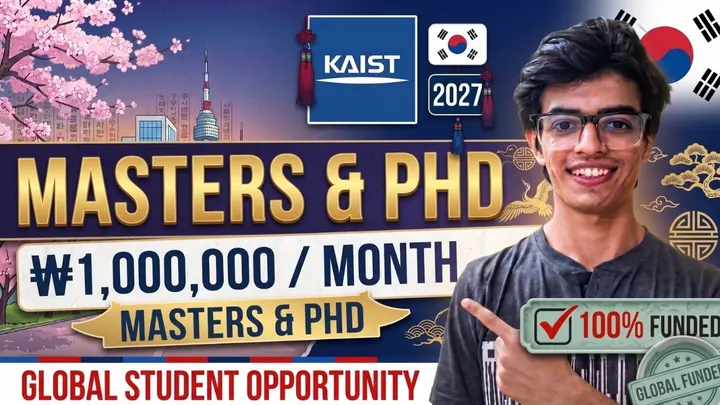
I hope this side‑by‑side view clears the fog around GKS, KAIST, and GIST scholarships. Pick the one that matches your scores, research passion, and where you see yourself living for the next few years. If anything feels fuzzy, drop a comment below or check out the video where I walk through my own application checklist. Good luck, and may your next adventure begin in the Land of the Morning Calm!
Found this useful?



Comments
Questions, experiences, thank-yous: all welcome. No sign-up needed.